

Chief Obafemi Awolowo: The Visionary Leader Who Dreamed of a Better Nigeria
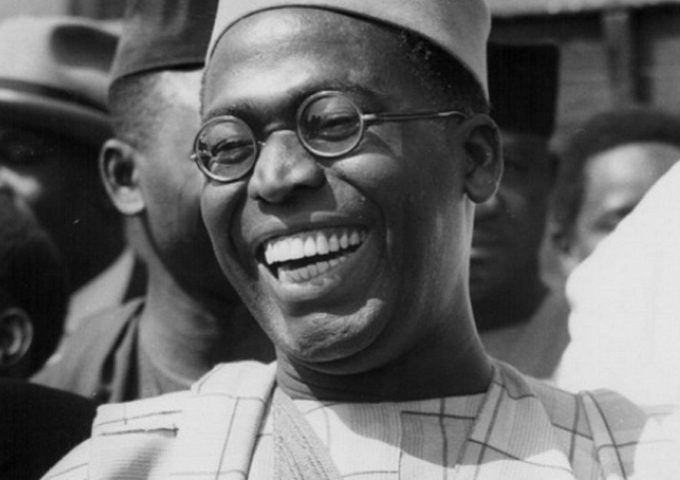
Few Nigerian politicians are still discussed with almost mythical respect decades after their death. Obafemi Awolowo is one of them.
Mention “free education” anywhere in Yorubaland today and chances are somebody will bring up Awolowo within minutes. To many Nigerians, he was more than a politician. He was an intellectual giant, a master strategist, and one of the few leaders who seemed obsessed with long-term development instead of short-term politics.
But his story was not all triumph.

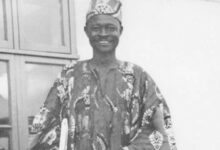
He faced betrayal, imprisonment, political warfare, and some of the fiercest rivalries in Nigerian history. Yet even his opponents often admitted one thing: Awolowo was brilliant.
Who Was Obafemi Awolowo?
Chief Obafemi Jeremiah Oyeniyi Awolowo was a Nigerian nationalist, lawyer, journalist, political thinker, and statesman who played a major role in Nigeria’s journey toward independence and post-colonial development.
Born on March 6, 1909, in Ikenne, present-day Ogun State, Awolowo became one of the most influential political leaders in 20th-century Nigeria. He is widely remembered for introducing free primary education in Western Nigeria, promoting regional development, and advocating federalism during Nigeria’s turbulent early years.
Awolowo was also the founder of the Action Group political party, one of the most powerful parties in Nigeria during the First Republic. His political ideas deeply influenced Yoruba politics and Nigerian governance as a whole.
Even today, many Nigerians still debate a fascinating question: what would Nigeria have looked like if Obafemi Awolowo had become president?
Early Life and Background
Obafemi Awolowo was born into a Yoruba family in Ikenne. His father, David Shopolu Awolowo, worked as a farmer and trader, while his mother, Mary Efunyela Awolowo, managed the family after her husband’s death.
Life was not easy for young Awolowo.
When his father died in 1920, the family struggled financially. Unlike some elite politicians who came from privileged homes, Awolowo experienced hardship directly. He worked several small jobs as a young man, including selling produce, working as a teacher, and even serving as a clerk.
You might be wondering how someone from such modest beginnings eventually became one of Nigeria’s most respected intellectuals.
The answer was discipline.
Awolowo took education extremely seriously. He studied privately while working and gradually built his academic qualifications step by step. Later, he attended Wesley College in Ibadan and eventually travelled to London to study law at the University of London.
While in Britain during the 1940s, Awolowo became deeply interested in nationalism, constitutional development, and African self-governance. Colonial rule across Africa was increasingly under pressure, and educated Africans were beginning to organise politically.
Awolowo was among them.
Obafemi Awolowo and the Rise of Yoruba Nationalism
One of Awolowo’s earliest major political achievements was helping to establish Egbe Omo Oduduwa in 1945.
The organization focused on promoting Yoruba unity, culture, education, and political advancement. At the time, ethnic and regional identities played enormous roles in Nigerian politics, especially as independence discussions intensified.
Awolowo believed strongly that the Yoruba people needed political organization and economic development to compete effectively within Nigeria’s emerging federal structure.
Not many people know this, but Awolowo was also a prolific writer and thinker. His book Path to Nigerian Freedom, published in 1947, argued passionately for federalism as the best structure for Nigeria’s ethnic diversity.
Years later, debates around restructuring and federalism in Nigeria would still echo many of Awolowo’s ideas.
The Action Group and Regional Politics
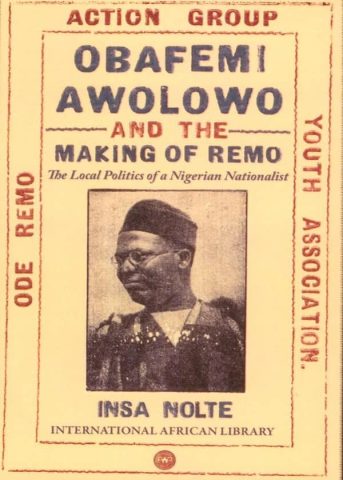
In 1951, Awolowo founded the Action Group (AG), a political party that quickly became dominant in Western Nigeria.
The Action Group was not just another political party shouting campaign slogans. It focused heavily on policy and development programs. Under Awolowo’s leadership, the Western Region experienced rapid modernization compared to many parts of Nigeria at the time.
By 1954, Awolowo became the Premier of the Western Region.
That was when his reputation truly exploded.
Obafemi Awolowo’s Free Education Revolution
If there is one policy Nigerians associate most strongly with Awolowo, it is free primary education.
In 1955, his government introduced free primary education throughout the Western Region. The impact was enormous.
Schools expanded rapidly. Enrollment numbers surged. Thousands of children from poor families suddenly gained access to education.
Today, it may sound normal. But back then, it was revolutionary.
Many families who could never have afforded formal schooling suddenly saw their children enter classrooms. Entire communities changed within a generation because of that policy.
Awolowo’s government also introduced free healthcare for children, rural development projects, and one of Africa’s earliest television stations — Western Nigerian Television (WNTV) in 1959.
Imagine that for a second. At a time when many African colonies were still struggling with basic infrastructure, Western Nigeria already had a television station.
The region also witnessed major investments in roads, agriculture, and public service institutions.
To his supporters, Awolowo represented disciplined, visionary leadership.
To his critics, however, he could also appear rigid and politically uncompromising.
Political Rivalries and National Tensions
Nigeria’s politics during the late colonial and early independence years was extremely tense.
Three dominant regional leaders emerged during this period: Obafemi Awolowo in the West, Nnamdi Azikiwe in the East, and Ahmadu Bello in the North.
Each represented powerful regional political interests.
Awolowo frequently clashed politically with rival leaders over constitutional arrangements, resource control, and the future direction of Nigeria.
After Nigeria gained independence in 1960, the Action Group moved into opposition at the federal level while the Northern People’s Congress (NPC) dominated the national government.
Then things began falling apart.
The Action Group Crisis and Imprisonment
By the early 1960s, internal conflicts within the Action Group created one of the biggest political crises in Nigerian history.
Awolowo and his deputy, Samuel Ladoke Akintola, disagreed sharply over political strategy and alliances. The disagreement escalated into chaos within the Western Region.
Violence spread across parts of the region. Political thugs attacked opponents. The crisis became so severe that people later referred to parts of that era as “Operation Wetie,” where houses were burned during political conflicts.
In 1963, Awolowo was charged with treasonable felony by Prime Minister Tafawa Balewa’s government. Authorities accused him of plotting to overthrow the federal government.
Awolowo denied the allegations completely.
Still, he was convicted and sentenced to ten years in prison.
Many of his supporters believed the charges were politically motivated and intended to neutralize one of the government’s strongest opponents.
For several years, one of Nigeria’s brightest political minds sat behind bars while the country drifted deeper into instability.
Obafemi Awolowo and the Nigerian Civil War
Everything changed after the military coups of 1966.
Following the collapse of the First Republic and the outbreak of the Nigerian Civil War in 1967, military leader General Yakubu Gowon released Awolowo from prison and appointed him Federal Commissioner for Finance and Vice Chairman of the Federal Executive Council.
This period remains controversial.
Awolowo played a major role in managing Nigeria’s wartime economy during the Biafran War. Supporters praised his financial discipline and organizational abilities. Critics, however, accused the federal government of harsh economic policies that worsened suffering during the conflict.
The war itself remains one of the most painful chapters in Nigerian history.
Awolowo’s involvement continues to generate debate even today.
Presidential Ambitions and Political Frustrations
After military rule began gradually giving way to civilian politics again, Awolowo returned to active political competition.
He contested presidential elections in 1979 and 1983 under the Unity Party of Nigeria (UPN). His campaigns focused heavily on education, healthcare, rural development, and social welfare.
Many Nigerians admired his ideas.
But he never became president.
Instead, Shehu Shagari of the National Party of Nigeria won both elections.
For many Awolowo supporters, those losses remain painful historical “what if” moments. They believed Nigeria missed an opportunity for disciplined, policy-driven leadership.
Even today, older Nigerians sometimes speak about Awolowo almost like a standard against which modern politicians are measured.
Challenges and Controversies
Obafemi Awolowo’s career was not free from controversy.
His strong regional support among Yoruba communities sometimes led opponents to accuse him of ethnic politics. Others criticized his rigid political style and difficult relationships with rivals.
The Civil War years also remain controversial due to economic decisions linked to the federal government during that period.
And of course, the treason trial of the 1960s remains heavily debated by historians. Was he genuinely involved in a coup plot, or was he politically targeted?
Opinions still differ sharply.
But even many critics admitted that Awolowo was unusually disciplined compared to many politicians of his generation.
Corruption scandals rarely stuck to him personally — something relatively rare in Nigerian political history.
Legacy and Impact of Obafemi Awolowo
Awolowo’s influence on Nigeria remains enormous.
His educational reforms transformed Western Nigeria permanently. Generations of doctors, lawyers, academics, journalists, and professionals emerged partly because of the free education policies he introduced.
Several institutions and landmarks honour him today, including Obafemi Awolowo University (OAU) in Ile-Ife, one of Nigeria’s most respected universities.
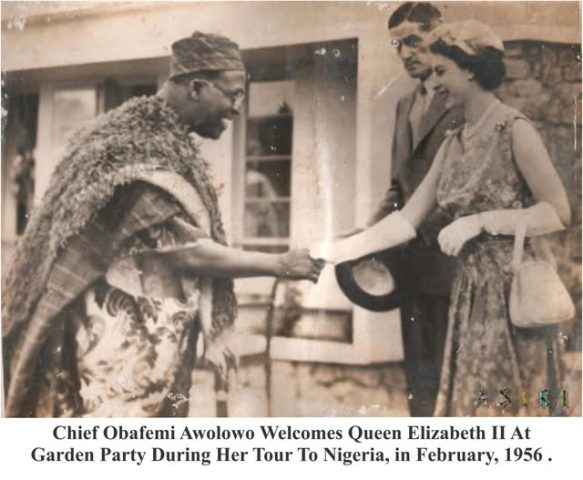
His face also appeared on the ₦100 note for many years, further cementing his place in national memory.
Politically, Awolowo helped popularize ideas around federalism, social welfare, and regional development that still shape Nigerian political debates today.
Without Awolowo, modern Yoruba politics — and perhaps Nigerian education itself — would likely look very different.
Death of Obafemi Awolowo
Chief Obafemi Awolowo died on May 9, 1987, at the age of 78.
His death triggered widespread mourning across Nigeria, especially in the Southwest where many viewed him almost as a father figure.
Even political opponents acknowledged his immense contribution to Nigerian political thought and governance.
Decades later, his legacy still inspires admiration, debate, and nostalgia.
Thanks for reading, OldNaija.com
References:
- Awolowo, Obafemi. Awo: The Autobiography of Chief Obafemi Awolowo. Cambridge University Press, 1960.
- Omipidan, T., & Omipidan, T. (2019, October 1). First speech of Obafemi Awolowo as the president of the Action Group, 1951. OldNaija. https://oldnaija.com/2018/09/13/first-speech-of-obafemi-awolowo-as-the-president-of-the-action-group-1951/
- Dudley, Billy J. Instability and Political Order: Politics and Crisis in Nigeria. Ibadan University Press, 1973.
- The Nigerian Civil War (1967-1970): The complete archive – OldNaIJA. (2025, December 23). OldNaija. https://oldnaija.com/nigerian-civil-war-history/
- BlackPast. (n.d.). Obafemi Awolowo (1909–1987). https://www.blackpast.org/global-african-history/awolowo-obafemi-1909-1987/
- Britannica, T. Editors of Encyclopaedia. (n.d.). Obafemi Awolowo. Encyclopaedia Britannica. https://www.britannica.com/biography/Obafemi-Awolowo
Questions? Advert? Click here to email us.