

Hajia Gambo Sawaba: Story of the Northern Nigerian Woman who Fought for Women’s Rights and Political Freedom.
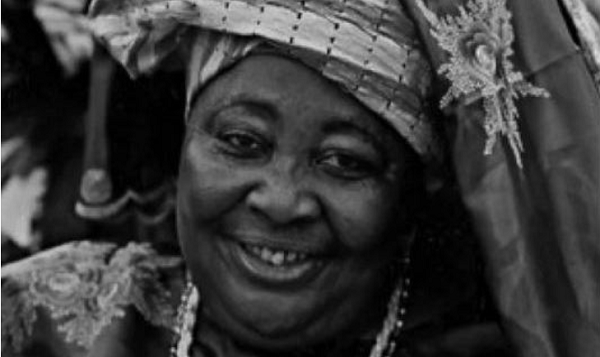
They beat her. Arrested her. Locked her up again and again.
But every time Hajia Gambo Sawaba came out of prison, she returned even louder.
In an era when many Northern Nigerian women were expected to remain behind the scenes, she stood in public squares challenging powerful politicians, criticising injustice, and demanding rights for ordinary people. To her supporters, she was fearless. To her enemies, she was dangerous.
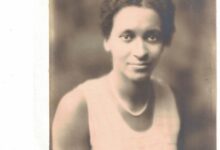
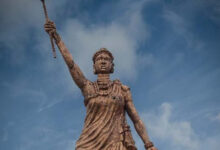
Either way, people listened when Gambo Sawaba spoke.
Who Was Hajia Gambo Sawaba?
Hajia Gambo Sawaba was a Nigerian political activist, women’s rights campaigner, and Northern nationalist who became famous for her fearless opposition to oppression and inequality in Northern Nigeria.
Born Hajaratu Gambo in 1933 in Zaria, Kaduna State, she emerged as one of the most influential female political figures in Northern Nigerian history. She was particularly known for fighting against forced marriage, child marriage, domestic abuse, and the exclusion of women from politics and education.
The name “Sawaba” itself carried political meaning. It came from the Hausa word for “freedom” or “liberation,” reflecting her deep connection to the Northern Elements Progressive Union (NEPU), the radical political movement led by Mallam Aminu Kano.
At a time when colonial rule, conservative traditions, and elite political structures dominated Northern Nigeria, Hajia Gambo Sawaba became one of the few women bold enough to confront them openly.
Her story belongs alongside other Nigerian activists and nationalist figures who challenged authority during the colonial and post-colonial periods.
Early Life and Background
Hajia Gambo Sawaba was born into a modest family in Zaria during British colonial rule. Her father was originally from Niger Republic, while her mother was Hausa from Northern Nigeria.
Life was not easy for her growing up.
She lost her father at a young age and had very little access to formal education. Like many girls in Northern Nigeria during that era, societal expectations for women were heavily restricted. Girls were often expected to marry early, focus on domestic life, and avoid public political involvement.
Gambo herself experienced many of these realities directly.
She was married off while still very young, but the marriage eventually failed. That difficult experience deeply influenced her later activism against child marriage and the mistreatment of women.
Imagine being a young woman in conservative colonial Northern Nigeria and deciding not only to question society’s rules but to challenge powerful men publicly. That alone required extraordinary courage.
And Gambo Sawaba had plenty of it.
Hajia Gambo Sawaba and the NEPU Movement
The turning point in her life came when she joined the Northern Elements Progressive Union (NEPU) in the 1950s.
NEPU was unlike many other political parties of the era. Led by Mallam Aminu Kano, the movement positioned itself as the voice of ordinary people — especially poor Northern masses who felt neglected by traditional elites and colonial-backed authorities.
Gambo Sawaba quickly became one of the party’s most recognisable grassroots organisers.
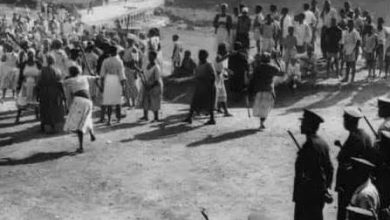
She travelled across Northern Nigeria, mobilising women, addressing political gatherings, and encouraging female participation in public life. At a time when many women could not even appear openly at political meetings, her presence alone was revolutionary.
Not many people know this, but she often faced hostility simply for speaking publicly as a woman. Some conservative figures believed politics was no place for women. Others viewed her activism as a dangerous rebellion.
But intimidation rarely worked on her.
She organised women politically in places where female political participation had previously been almost invisible.
Fighting for Women’s Rights in Northern Nigeria
Hajia Gambo Sawaba’s activism was not limited to party politics.
She openly campaigned against child marriage, forced marriage, unfair treatment of widows, and restrictions on women’s education. These were highly sensitive issues in conservative Northern society during the mid-20th century.
Speaking against such practices could easily attract backlash.
Yet Gambo continued.
She believed strongly that Northern women deserved education, economic opportunities, and political representation. In many of her speeches, she criticised systems that kept women dependent and voiceless.
You have to remember the context. This was an era when very few women in Northern Nigeria could openly criticise social traditions without severe consequences.
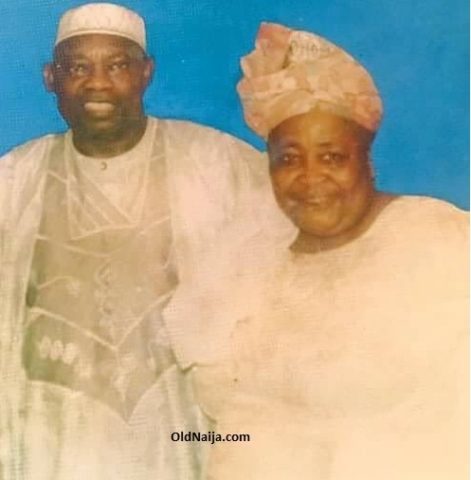
Still, Gambo Sawaba travelled from town to town speaking directly to women and encouraging them to become politically aware.
Her activism gradually inspired many Northern women to participate more actively in public life.
Arrests, Harassment, and Political Persecution
One reason Hajia Gambo Sawaba became legendary was her astonishing resilience.
She was arrested multiple times throughout her political career — reportedly more than a dozen times. Some accounts even claim she was imprisoned over 15 times.
Authorities viewed her as troublesome because she constantly challenged established power structures.
During colonial rule and even after independence, political opponents frequently targeted radical activists. Gambo faced police harassment, detention, physical assaults, and repeated intimidation.
At one point, she was allegedly assaulted so badly during detention that it affected her health permanently.
But every time she was released, she returned to activism again.
That stubborn determination earned her enormous respect among ordinary people, especially poor women who saw her as someone genuinely fighting for them.
In many ways, she represented a Northern version of activists like Funmilayo Ransome-Kuti, although their political environments were very different.
Hajia Gambo Sawaba’s Relationship with Aminu Kano
Gambo Sawaba worked closely with Mallam Aminu Kano, one of Northern Nigeria’s most important political reformers.
The two shared similar political ideals centered around social justice, equality, and opposition to elite domination.
Aminu Kano recognised her courage and political talent early. Unlike many politicians of the era, he encouraged women’s involvement in political movements.
This partnership helped expand women’s participation within NEPU and later political movements connected to Aminu Kano’s ideology.
Together, they challenged the conservative aristocratic system that dominated much of Northern politics during the colonial and early post-independence years.
Their movement became especially popular among talakawa — ordinary poor people who felt excluded from power.
Challenges and Controversies
Hajia Gambo Sawaba’s life was filled with struggles.
Apart from arrests and physical attacks, she also faced deep social criticism. Many conservatives believed her activism threatened traditional Northern values.
Some accused her of encouraging women to become disobedient. Others claimed she was too radical.
For a woman operating in Northern Nigerian politics during the 1950s and 1960s, criticism was almost unavoidable.
She also struggled financially at different points in her life despite her political importance. Unlike many politicians who accumulated wealth and influence, Gambo remained closely connected to ordinary people.
There is something deeply ironic about that.
A woman who sacrificed so much for political activism often lived without the comfort and luxury enjoyed by many public office holders.
But perhaps that was part of why many people trusted her.
She did not look or behave like someone fighting merely for personal gain.
Legacy and Impact of Hajia Gambo Sawaba
Today, Hajia Gambo Sawaba is remembered as one of the most important female activists in Northern Nigerian history.
She opened political doors for generations of Northern women who later entered activism, journalism, public service, and politics. Without women like her, female political participation in Northern Nigeria might have progressed far more slowly.
Her story also challenged stereotypes about Northern Nigerian women being passive or politically disconnected. Gambo proved that Northern women could organise politically, resist oppression, and influence national conversations.
In recent years, historians and activists have increasingly recognised her contributions to Nigeria’s democratic and feminist history.
Schools, women’s organisations, and political groups continue to reference her legacy as a symbol of courage and resistance.
Even today, conversations around women’s rights, girl-child education, and political inclusion in Northern Nigeria still echo many of the issues she fought against decades ago.
Death of Hajia Gambo Sawaba
Hajia Gambo Sawaba died on October 16, 2001, at the age of 68.
Many Nigerians — especially in Northern communities — remembered her not as a wealthy politician or government official, but as a fearless grassroots activist who spent her life confronting injustice directly.
That reputation has endured.
Thanks for reading, OldNaija.com.
References:
- Adamu, Mahdi. The Hausa Factor in West African History. Ahmadu Bello University Press, 1978.
- Aminu, Hassan. Political Activism in Northern Nigeria: The Legacy of NEPU. Kaduna Historical Press, 1999.
- Mackintosh, John P. Nigerian Government and Politics. George Allen & Unwin, 1966.
- Paden, John N. Ahmadu Bello, Sardauna of Sokoto: Values and Leadership in Nigeria. Hodder and Stoughton, 1986.
- Idachaba, S. (2024, September 20). The Unforgotten Hero Sawaba Gambo – Blueprint Newspapers Limited. Blueprint Newspapers Limited.
Questions? Advert? Click here to email us.