

First Military Coup in Nigeria: How and Why it was Staged on January 15, 1966
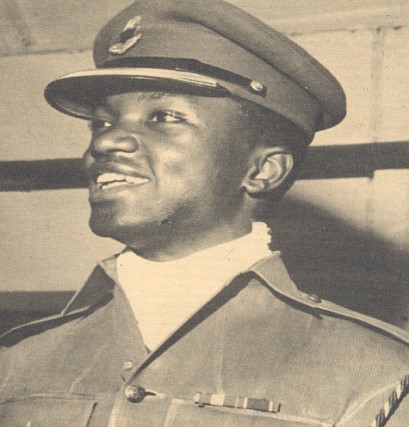
Sleep disappeared from Lagos on the night of January 14, 1966.
Politicians relaxed in government lodges. Senior officers stayed in their barracks. Radios played music into the humid night. Nobody knew that a small group of young majors had already made up their minds: by morning, Nigeria’s First Republic would bleed.
Before dawn broke on January 15, gunfire echoed through parts of Kaduna, Ibadan, Lagos, and other strategic locations. Prime Minister Sir Abubakar Tafawa Balewa vanished. Premier Sir Ahmadu Bello lay dead in Kaduna. Chief Samuel Ladoke Akintola was shot in Ibadan. By sunrise, Nigeria had entered a completely different era.
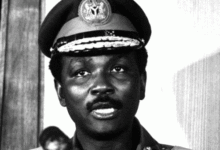
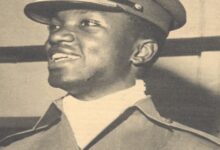
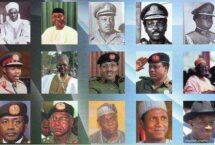
The story of the First Military Coup in Nigeria is not just about soldiers overthrowing a civilian government. It is a story of ambition, anger, ethnic suspicion, political violence, and a country already cracking only six years after independence.
To understand how those young officers carried out the coup, you have to go back to the chaos that consumed Nigeria in the years before January 1966.
Nigeria Before the Coup
Nigeria gained independence from the United Kingdom in 1960 with enormous hope. Many believed the new nation would become Africa’s giant almost immediately. But beneath the celebration sat deep divisions.
The political structure itself encouraged regional rivalry. The Northern Region dominated by the NPC, the Western Region controlled largely by the Action Group, and the Eastern Region under the NCNC all competed for power like rival kingdoms forced into one country.
Things worsened after the controversial 1964 federal elections. Allegations of rigging spread everywhere. Violence erupted in parts of the Western Region during the crisis later nicknamed “Operation Wetie.” Political opponents attacked one another openly. Houses burned. People died in the streets.
For many young military officers, civilian politicians had become symbols of corruption, tribalism, and disorder.
This is where things get interesting.
Most of the coup plotters were not old generals hungry for power. They were relatively young majors — educated, ambitious, impatient men who believed they could “save” Nigeria. Some had served in peacekeeping operations abroad and felt embarrassed by the political mess at home.
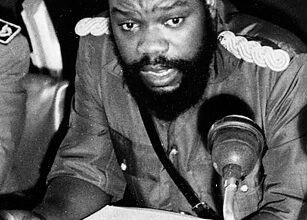
Among the most prominent was Chukwuma Kaduna Nzeogwu, the charismatic major who would become the face of the coup.
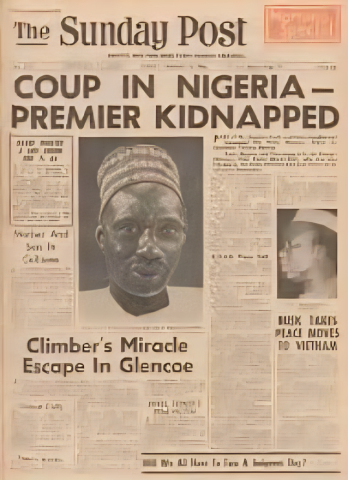
The Secret Planning of the First Military Coup in Nigeria
The coup did not happen overnight.
The planning reportedly began months earlier among a circle of young officers frustrated with Nigeria’s political leadership. Meetings took place quietly in homes, military quarters, and private gatherings where trusted officers discussed removing the government.
The conspirators included men like Emmanuel Ifeajuna, Adewale Ademoyega, Timothy Onwuatuegwu, Chris Anuforo, and others.
They believed swift military action could end corruption and reset Nigeria.
Their strategy relied on surprise.
Instead of mobilising the entire army, they used small groups of loyal soldiers positioned in key cities. The plan focused on eliminating top political leaders and taking over communication centres, military installations, airports, and government buildings before loyalist forces could respond.
Each conspirator received a target area.
Nzeogwu would operate mainly in Kaduna. Others handled Lagos, Ibadan, and parts of the East.
The coup plotters also hoped senior military officers would eventually support them once the civilian government collapsed. That assumption would later become one of their biggest mistakes.
January 15, 1966: The Night Nigeria Changed Forever
The operation began in the early hours of January 15.
In Kaduna, Major Nzeogwu moved decisively. Soldiers under his command attacked key locations and arrested senior officers. Northern Premier Ahmadu Bello was killed during the assault on his residence. His wife Hafsatu and several aides also died.
Nzeogwu then seized the Kaduna Radio Station and delivered a broadcast announcing that the military had taken over to rid Nigeria of corruption and political chaos.
Meanwhile, in Ibadan, Premier Samuel Ladoke Akintola resisted arrest and was shot dead in his residence after an exchange of gunfire.
In Lagos, the federal capital, the situation became more chaotic.
Prime Minister Abubakar Tafawa Balewa was abducted. His body was later discovered by a roadside near Lagos days afterward. Finance Minister Festus Okotie-Eboh was also killed.
Several senior military officers died too, including Brigadier Samuel Ademulegun and Colonel Kur Mohammed.
But the coup did not succeed everywhere.
Some military commanders escaped capture. Others organised resistance quickly. In Lagos especially, loyalist officers began regrouping before the coup plotters could fully consolidate control.
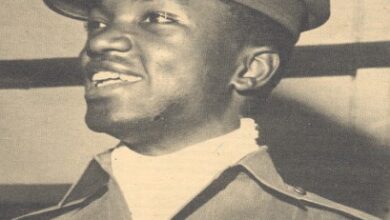
One man would prove decisive: Major General Johnson Aguiyi-Ironsi.
Why the Coup Failed — and Still Took Power
This is one of the strangest parts of the story.
Technically, the coup failed.
The conspirators never gained complete control of Nigeria. Their coordination broke down in several areas. Some targets survived. Communication problems slowed operations. Several officers hesitated at critical moments.
Most importantly, the coup lacked nationwide support within the military.
Aguiyi-Ironsi, then the highest-ranking Nigerian officer, moved against the mutineers. Loyal troops gradually regained control in Lagos and other areas.
But while the coup plotters failed militarily, civilian authority had already collapsed.
The political leadership was shattered. Several top politicians were dead. The country sat leaderless and frightened. With no functioning civilian government left, Ironsi stepped in and assumed power on January 16, 1966, effectively ending Nigeria’s First Republic.
Nigeria had entered military rule.
And once the soldiers entered politics, they would remain major players for decades.
The Ethnic Controversy That Followed
The killings immediately sparked dangerous ethnic suspicion.
Most of the prominent politicians killed during the coup came from Northern and Western Nigeria. Meanwhile, several leading Eastern politicians survived. Because many of the coup plotters were Igbo officers, many Northerners viewed the operation as an ethnic conspiracy rather than a patriotic revolution.
Whether that was truly the intention remains debated today.
Some historians argue the coup plotters targeted corruption, not ethnicity. Others point to the pattern of killings as evidence that ethnic bias played a role.
Either way, perception became reality.
Anger spread rapidly across Northern Nigeria. Suspicion of the Igbo population intensified inside the military and among civilians.
This tension would explode months later in the July 1966 counter-coup, where northern officers retaliated violently, assassinating Ironsi and many Igbo officers. Nigeria then spiralled toward the catastrophe of the Nigerian Civil War.
The Role of Nzeogwu: Revolutionary or Rebel?
No figure from the coup remains more controversial than Nzeogwu.
To some Nigerians, he was an idealist — a disciplined officer disgusted by corruption and political violence. His famous radio speech sounded almost revolutionary. He condemned “political profiteers,” tribalists, and corrupt leaders who had betrayed the country.
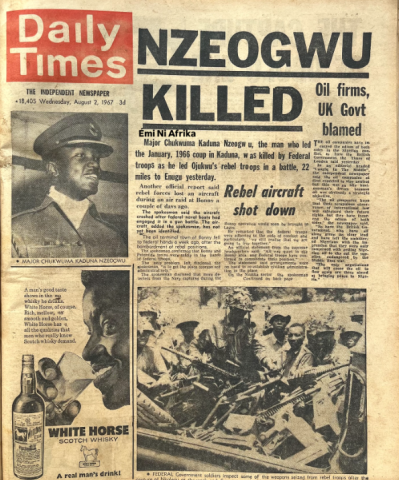
To others, he was simply a mutineer whose actions destabilised Nigeria permanently.
Ironically, Nzeogwu himself reportedly maintained friendships across ethnic lines and had strong cultural ties to Northern Nigeria despite his Igbo background. He even spoke Hausa fluently.
After the coup failed, he surrendered and was detained by the Ironsi government. But the outbreak of the Civil War later returned him to the battlefield, where he died in 1967.
Today, discussions about him still divide Nigerians sharply.
How the Coup Changed Nigeria Forever
Before January 1966, military coups were not part of Nigeria’s political culture.
Afterwards, they became almost normal.
The first coup destroyed civilian confidence and introduced a dangerous cycle of military intervention. From Ironsi to Gowon, from Murtala Mohammed to Buhari, Babangida, and Abacha, the military would dominate Nigerian politics for much of the next three decades.
The coup also deepened ethnic mistrust within the armed forces and among ordinary Nigerians. Many of the tensions that surfaced during the January coup later fed directly into the Civil War and the long struggle over national unity.
You can trace a straight line from January 15, 1966 to many of Nigeria’s later crises.
Even today, debates about fairness, federal balance, ethnic power, corruption, and military influence still echo the arguments that surrounded the coup plotters sixty years ago.
That is why the First Military Coup in Nigeria still matters.
Not because it was the first time soldiers seized power. But because it marked the moment many Nigerians lost faith in the dream that independence alone could unite the country.
And once the bullets started flying that January morning, Nigeria could never fully return to the innocence of October 1, 1960.
Thanks for reading, OldNaija.com. This article is part of our Complete History of the Nigerian Civil War series.
References:
- Ademoyega, A. (1981). Why We Struck: The Story of the First Nigerian Coup. Evans Brothers.
- The Nigerian Civil War (1967-1970): The complete archive – OldNaIJA. (2025, December 23). OldNaija. https://oldnaija.com/nigerian-civil-war-history/
- Gbulie, B. (1981). Nigeria’s Five Majors: Coup d’Etat of 15th January 1966, First Inside Account. Africana Educational Publishers.
- Omipidan, T. (2025, August 25). Complete Timeline of Nigerian History: Pre-Colonial era till date – OldNaIJA. OldNaija. https://oldnaija.com/2025/08/22/complete-timeline-of-nigerian-history/
- BBC News. (2016, January 15). How the first coup still haunts Nigeria 50 years on. https://www.bbc.com/news/world-africa-35312370
- OldNaija. (2020). January 15 in Nigeria’s History: The first military coup in Nigeria was Staged.
- Siollun, M. (2009). Oil, Politics and Violence: Nigeria’s Military Coup Culture (1966-1976). Algora Publishing.
Questions? Advert? Click here to email us.