

Abubakar Tafawa Balewa: The Gentle Leader Whose Death Changed Nigeria Forever
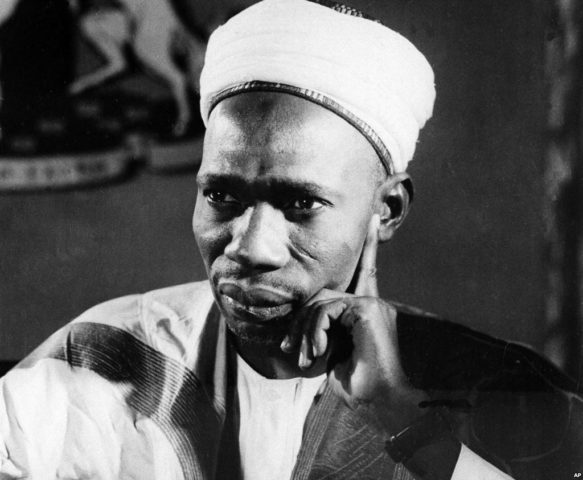
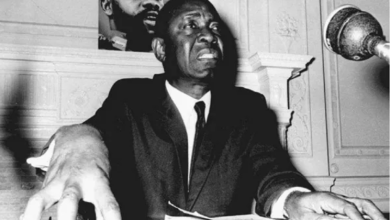
On a dusty road near Lagos in January 1966, villagers stumbled upon a terrible sight — the lifeless body of Nigeria’s Prime Minister, Abubakar Tafawa Balewa.
The news spread like wildfire. People could hardly believe it. The soft-spoken man who had stood before world leaders, represented Nigeria at independence, and preached unity across ethnic lines was suddenly gone.
For many Nigerians alive at the time, it felt like innocence had died with him.
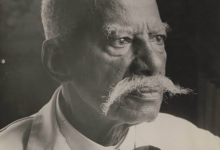
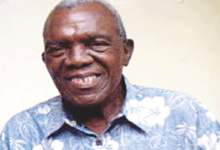
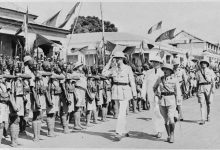
Balewa was not the loudest politician of his generation. He was not known for fiery speeches or dramatic behaviour. Yet somehow, this humble teacher from Bauchi Province rose to become the leader of Africa’s most populous country during one of the most important moments in its history.
And decades later, Nigerians still ask the same question: what would have happened if Tafawa Balewa had lived longer?
Who Was Abubakar Tafawa Balewa?
Sir Abubakar Tafawa Balewa was a Nigerian nationalist, teacher, politician, and statesman who became Nigeria’s first and only Prime Minister after independence in 1960. He was born in December 1912 in Tafawa Balewa, a town in present-day Bauchi State in Northern Nigeria.
A proud Hausa-Fulani Muslim from Northern Nigeria, Balewa emerged during the final decades of British colonial rule when Nigerians were beginning to demand self-government and political representation. He became one of the leading figures in the Northern People’s Congress (NPC), the dominant political party in Northern Nigeria during the colonial period.
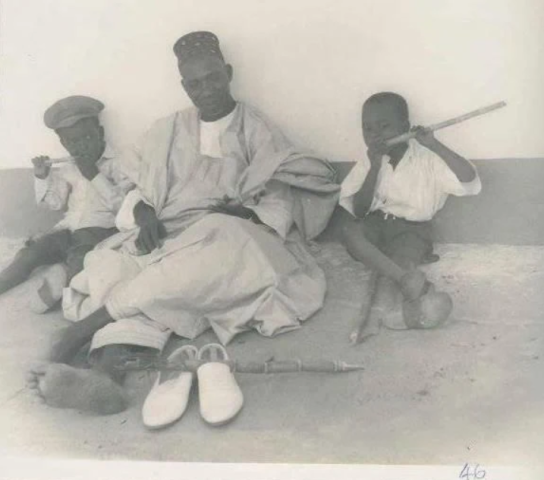
LEAVE RELAXATING WITH HIS CHILDREN IN HIS FARM HOUSE NEAR BAUCHI- 1963.
Unlike some politicians known for aggression and political drama, Tafawa Balewa carried himself with calmness and dignity. Even his critics admitted he was humble and deeply courteous. Yet beneath that gentle personality was a man trying to hold together a deeply divided country filled with ethnic tensions, regional rivalries, and growing political suspicion.
Early Life and Background of Abubakar Tafawa Balewa
Abubakar Tafawa Balewa grew up in Northern Nigeria at a time when Western education was still limited in many parts of the region. His father worked as a district head assistant, and the family lived a modest life.
Not many people know this, but “Tafawa Balewa” was originally the name of his hometown, not a family surname in the modern sense. Over time, the name became permanently attached to him.
As a child, Balewa attended Quranic school before entering Bauchi Provincial School. He later studied at Katsina Teacher Training College, one of the most respected institutions in Northern Nigeria during that era. The school produced several future Northern leaders and intellectuals.
Education changed his life completely.
At a time when very few Northerners had access to advanced Western education, Balewa stood out as intelligent, disciplined, and articulate. He eventually became a teacher and later travelled to London in 1945 to study at the Institute of Education, University of London.
Imagine being a young Northern Nigerian in colonial times, travelling all the way to Britain for studies while your country was still under foreign rule. That experience broadened his worldview and prepared him for the political battles ahead.
How Abubakar Tafawa Balewa Entered Politics
Before politics fully consumed his life, Tafawa Balewa genuinely loved teaching. In fact, many people who knew him said he never lost the calm temperament of a schoolmaster.
But colonial Nigeria was changing quickly after World War II. Across Africa, nationalist movements were gaining momentum. Nigerians wanted greater representation, self-rule, and an end to British domination.
Balewa joined politics through the Northern People’s Congress (NPC), a party strongly linked to the traditional leadership structure of Northern Nigeria.
At first, Northern leaders were cautious about rapid independence. Many feared the North was educationally behind the South and might struggle politically in a fully independent Nigeria. Balewa found himself balancing modernisation with the protection of Northern interests.
It was not an easy position.
Balewa gained national attention in the 1940s and 1950s after becoming a member of Nigeria’s Legislative Council.
His speeches stood out because they were thoughtful rather than aggressive. He spoke carefully, often emphasising cooperation between Nigeria’s different regions.
One famous moment came in 1947 when he argued that Nigeria was still “a collection of self-governing communities” rather than a truly united nation. Some people misunderstood the statement, but Balewa was pointing out the reality of Nigeria’s diversity under colonial rule.
And honestly, even today, many Nigerians still debate that same issue.
As constitutional conferences continued in London and Lagos during the 1950s, Balewa became one of the key negotiators representing Northern interests.
Becoming Nigeria’s first Prime Minister
In 1957, Abubakar Tafawa Balewa became the Chief Minister of Nigeria under British colonial supervision. Then, on October 1, 1960, Nigeria finally gained independence.
Balewa became the country’s first Prime Minister.
Picture the scene for a moment.
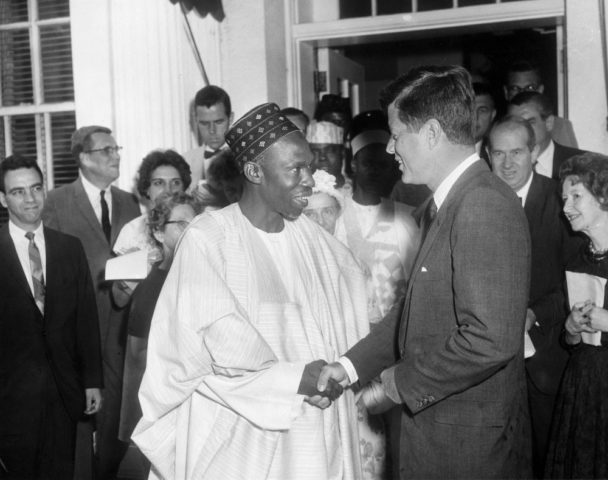
Crowds filled the streets of Lagos. British colonial rule was ending after decades of domination. Nigerian green-and-white flags waved proudly in the air. And standing at the center of it all was Tafawa Balewa.
His independence speech reflected hope, caution, and responsibility. He understood the enormous challenge ahead. Nigeria was a massive country with different ethnic groups, religions, and political interests competing for power.
Yet Balewa believed unity was possible.
Balewa’s leadership style
Abubakar Tafawa Balewa governed with moderation and diplomacy.
He was respected internationally for his calm personality and balanced foreign policy. Under his leadership, Nigeria became active in African affairs and supported anti-colonial movements across the continent.
During the Congo Crisis of the early 1960s, Nigeria played an important peacekeeping role. Balewa also opposed apartheid in South Africa and supported African unity.
International leaders admired him.
At home, however, things were becoming complicated.
Regional tensions between the North, West, and East continued to grow. Political rivalries became more intense after independence. Elections were increasingly controversial. Ethnic suspicion deepened.
Balewa often found himself trapped between powerful political forces.
Challenges, Political Crisis, and Growing Tension
The early years after independence were far from peaceful.
Nigeria’s political structure was fragile, and regional leaders competed aggressively for influence. The NPC dominated the North, while the Action Group controlled much of the West, and the NCNC remained influential in the East.
The Western Region crisis of the early 1960s nearly pushed the country into chaos.
Violence erupted. Political thugs attacked opponents. Accusations of election rigging became widespread. Many Nigerians began losing faith in politicians altogether.
Balewa tried to preserve national stability, but critics argued his government was too close to Northern political interests. Others believed he failed to act strongly enough against corruption and regional tensions.
You could say he inherited a country that was already deeply divided before independence even arrived.
The Assassination of Abubakar Tafawa Balewa
In the early hours of January 15, 1966, young military officers launched Nigeria’s first military coup.
The country woke up to confusion and fear.
Senior politicians and military leaders were arrested or killed. Among them was Prime Minister Abubakar Tafawa Balewa.
Initially, nobody knew where he was.
For days, rumours spread across the country. Then came the heartbreaking discovery: his body was found near Lagos along the Lagos-Abeokuta Road.
The exact details surrounding his death remain debated even today. Some reports claimed he was shot. Others suggested he may have died from exhaustion or mistreatment while in captivity.
What is certain is this: his death marked the end of Nigeria’s First Republic and opened the door to decades of military coups and political instability.
Many Nigerians still see January 1966 as one of the darkest turning points in the nation’s history.
Despite ruling Nigeria for only a few years after independence, Tafawa Balewa left behind an enormous legacy.
He represented a generation of Nigerian nationalists who genuinely believed the country could rise above ethnic and regional divisions. His calm leadership style remains rare in Nigerian politics even today.
Thanks for reading, OldNaija.com.
REFERENCES:
- Omipidan, T. (2021, May 25). How Ibrahim Babankowa Found Tafawa Balewa’s Decomposing Body Along Lagos-Abeokuta Road – OldNaija. OldNaija. https://oldnaija.com/2017/06/05/how-ibrahim-babankowa-found-tafawa-balewas-decomposing-body-along-lagos-abeokuta-road/
- Dudley, B. J. (1982). An introduction to Nigerian government and politics. Macmillan Press.
- Kirk-Greene, A. H. M. (1975). Crisis and conflict in Nigeria: A documentary sourcebook, 1966–1970. Oxford University Press.
- Omipidan, T. (2025b, August 21). Northern People’s Congress (NPC) – OldNaija. OldNaija. https://oldnaija.com/2020/05/09/northern-peoples-congress-npc/
- Sklar, R. L. (1963). Nigerian political parties: Power in an emergent African nation. Princeton University Press.
- Tamuno, T. N. (1970). The evolution of the Nigerian state: The southern phase, 1898–1914. Longman.
Questions? Advert? Click here to email us.