

Sir Ahmadu Bello: The Northern Leader Who Chose His Region Over National Power
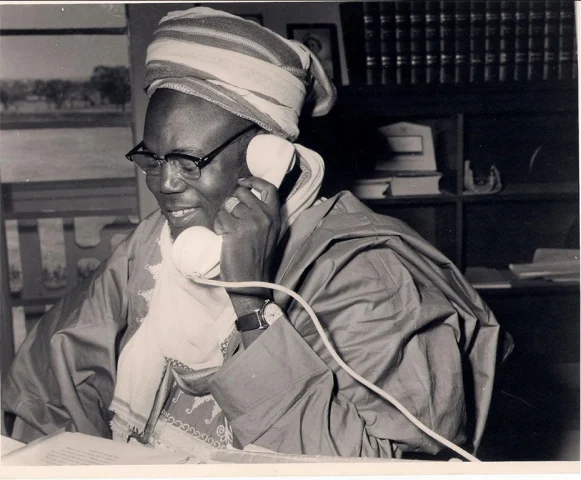
When Nigeria became independent in 1960, one man had the political strength to become the country’s first Prime Minister. Many expected him to take the position.
But he refused.
Instead, Sir Ahmadu Bello stayed in Northern Nigeria, choosing regional leadership over national office. That single decision would change Nigerian history forever.
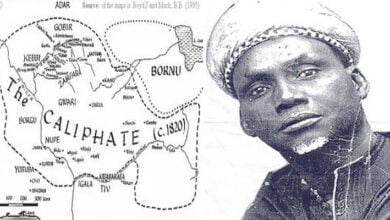
To millions in the North, he was more than a politician. He was the Sardauna of Sokoto, a respected traditional title linked to the legacy of the Sokoto Caliphate. Calm, strategic, deeply influential, and fiercely committed to Northern development, Sir Ahmadu Bello became one of the most powerful figures in Nigeria’s early political history.
And his assassination in 1966 shocked the entire country.
Who Was Ahmadu Bello?
Sir Ahmadu Bello was a Nigerian statesman, conservative nationalist, traditional aristocrat, and political leader who served as the Premier of Northern Nigeria from 1954 until his death in 1966.
Born on June 12, 1910, in Rabah, Sokoto Province, he was a descendant of Usman dan Fodio, the founder of the Sokoto Caliphate. Sir Ahmadu Bello emerged as one of the dominant political figures during Nigeria’s transition from colonial rule to independence.
He was also the leader of the Northern People’s Congress (NPC), the political party that controlled much of Northern Nigeria during the First Republic.
Unlike some nationalist leaders who focused mainly on anti-colonial activism, Ahmadu Bello concentrated heavily on modernization, education, and political unity within Northern Nigeria. He believed the North needed to strengthen itself educationally and economically before competing politically with the more Western-educated Southern regions.
That belief influenced almost every decision he made.
Early Life and Background
Ahmadu Bello was born into an influential Fulani Muslim family connected to the Sokoto Caliphate aristocracy. His lineage gave him prestige from an early age, but his path to leadership was not automatic.
Northern Nigeria during the early 20th century was under British colonial administration, operating largely through indirect rule. Traditional rulers and Islamic institutions still held enormous authority in society.
Young Ahmadu Bello received Islamic education first, as was common in elite Muslim households. Later, he attended Sokoto Middle School and then Katsina Training College, one of the most prestigious educational institutions in Northern Nigeria at the time.
Not many people know this, but Bello originally hoped to become the Sultan of Sokoto after the death of Sultan Muhammadu Tambari in 1938.
He contested for the position but lost.
That defeat could have ended his ambitions entirely. Instead, it redirected him toward politics and administration.
Sometimes history turns on disappointments people never planned for.
Ahmadu Bello’s Entry into Politics
After losing the Sultanate contest, Ahmadu Bello entered the Sokoto Native Authority system and gradually rose through administrative ranks.
By the 1940s, colonial authorities and traditional elites increasingly recognized his intelligence, discipline, and leadership abilities.
Nigeria itself was changing rapidly during this period. Nationalist movements were growing stronger. Educated elites in Lagos and other Southern cities were demanding constitutional reforms and self-government.
Northern leaders feared the North might fall behind politically and educationally if it did not organize quickly.
Ahmadu Bello became central to that effort.
The Northern People’s Congress (NPC)
In 1949, Ahmadu Bello helped transform a Northern cultural organization into the Northern People’s Congress (NPC), which later became the dominant political party in Northern Nigeria.
The NPC was deeply rooted in Northern traditional institutions and Islamic leadership structures. Bello used the party to strengthen political unity across the region’s diverse ethnic and religious communities.
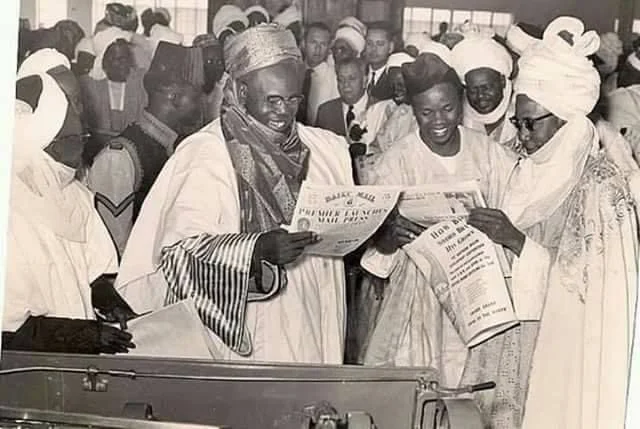
at the launch of the newspaper, Daily Mail in Kano, March 1, 1961.
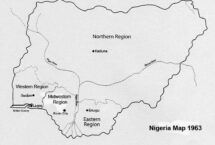
At the time, Northern Nigeria was massive — larger in population and territory than the Eastern and Western regions combined. Governing such a vast area was not easy.
Yet Bello managed to build an unusually strong political network.
You might be wondering why he became so influential so quickly.
Part of the answer was his ability to balance modern politics with traditional authority. Unlike some politicians who dismissed traditional institutions, Bello worked closely with emirs and local leaders.
That gave him enormous grassroots influence.
Ahmadu Bello as Premier of Northern Nigeria
In 1954, Ahmadu Bello became the first Premier of Northern Nigeria.
This was the role that defined his legacy.
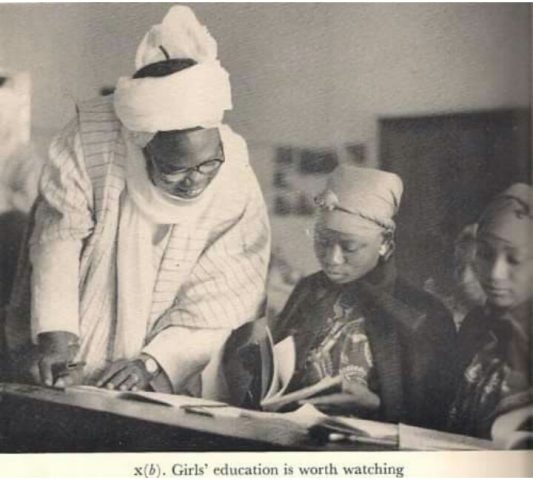
As Premier, he focused heavily on modernization and development. Northern Nigeria lagged behind the South in Western education due partly to historical differences in colonial educational policies.
Bello saw education as essential for the North’s future.
Under his leadership, schools expanded significantly across the region. Institutions such as Ahmadu Bello University in Zaria would later emerge from his vision for educational advancement.
He also encouraged agricultural development, civil service reforms, and economic growth.
But Bello approached modernization cautiously.
Unlike some Southern nationalists who embraced rapid Westernization enthusiastically, he wanted development that preserved Northern culture, Islamic values, and traditional leadership structures.
That balancing act became one of the defining features of his political philosophy.
Why Ahmadu Bello Refused to Become Prime Minister
One of the most fascinating moments in Nigerian political history came in 1960.
Nigeria was preparing for independence. The NPC had emerged as the strongest political force nationally through alliances with other parties. Many expected Ahmadu Bello to become the country’s first Prime Minister.
Instead, he stepped aside and nominated his deputy, Abubakar Tafawa Balewa, for the position.
Why?
Historians still debate this question.
Some believe Bello preferred maintaining direct control over Northern politics rather than relocating permanently to Lagos, which was then the federal capital. Others argue he believed the North still needed his leadership more urgently.
Whatever the reason, the decision permanently altered Nigeria’s political structure.
While Balewa governed nationally, Ahmadu Bello remained the North’s undisputed political leader.
In practice, many people believed Bello remained the more powerful figure politically.
Relationship with Other Nigerian Leaders
Nigeria’s First Republic featured several towering political personalities.
Ahmadu Bello in the North. Obafemi Awolowo in the West. Nnamdi Azikiwe in the East.
These leaders cooperated sometimes but also competed fiercely.
Bello often clashed politically with Awolowo over federalism, regional autonomy, and national policy direction. Relations between Northern and Southern political elites were frequently tense, especially as fears of ethnic domination grew stronger before and after independence.
Yet Bello also believed strongly in preserving Nigerian unity.
One of his famous statements described Nigeria as “the mistake of 1914” — referring to the British amalgamation of Northern and Southern protectorates. Still, despite recognizing Nigeria’s deep divisions, he worked to keep the country together politically.
That contradiction reflected the complexity of Nigerian politics itself.
Controversies
Ahmadu Bello’s political career was not free from controversy.
Critics accused the NPC government of relying too heavily on traditional aristocratic systems and limiting political opposition in Northern Nigeria. Radical movements like the Northern Elements Progressive Union (NEPU), led by Aminu Kano, strongly criticized Sir Ahmadu Bello’s leadership style and accused the Northern elite of neglecting poor masses.
Others argued that the North under Bello resisted modernization too cautiously, especially regarding women’s rights and political freedoms.
There were also accusations of electoral manipulation and political intimidation during parts of the First Republic.
At the same time, many Northerners viewed Bello as a stabilizing force who protected Northern interests during a highly uncertain period.
Like many major political figures, opinions about him depended heavily on who was speaking.
The January 1966 Coup and Assassination
Then came January 15, 1966.
A group of young military officers launched Nigeria’s first military coup. Several top political leaders were targeted and killed across the country.
Ahmadu Bello was among them. He was 55 years old.
Soldiers attacked his residence in Kaduna during the coup. Bello and his wife, Hafsatu, were killed during the assault.
News of his death spread rapidly and triggered enormous shock throughout Northern Nigeria.
For many Northerners, the assassination felt deeply personal.
The coup itself would eventually contribute to rising ethnic tensions, military rule, counter-coups, and ultimately the Nigerian Civil War.
In many ways, Ahmadu Bello’s death marked the violent end of Nigeria’s First Republic.
Legacy and Impact of Sir Ahmadu Bello
Today, Ahmadu Bello remains one of the most respected figures in Northern Nigerian history.
His influence can still be seen across education, politics, and regional identity in Northern Nigeria. Ahmadu Bello University (ABU), Zaria — one of Africa’s largest universities — was named in his honour.
Roads, institutions, and public buildings across Nigeria also carry his name.
Supporters remember him as a disciplined leader who prioritized Northern development and political stability. They credit him with expanding education, strengthening institutions, and protecting Northern interests during Nigeria’s fragile early years.
Critics, however, continue debating whether his political system reinforced elite dominance too strongly.
Either way, ignoring Ahmadu Bello’s role in Nigerian history is impossible.
Without him, Northern Nigeria — and perhaps Nigeria itself — might have developed very differently.
Thanks for reading, OldNaija.com.
References:
- Omipidan, T. (2025b, August 21). Northern People’s Congress (NPC) – OldNaija. OldNaija. https://oldnaija.com/2020/05/09/northern-peoples-congress-npc/
- Bello, Ahmadu. My Life. Cambridge University Press, 1962.
- Coleman, James S. Nigeria: Background to Nationalism. University of California Press, 1958.
- Paden, John N. Ahmadu Bello, Sardauna of Sokoto: Values and Leadership in Nigeria. Hodder and Stoughton, 1986.
- Sklar, Richard L. Nigerian Political Parties: Power in an Emergent African Nation. Princeton University Press, 1963.
- Eap_Admin. (2026, March 19). AHMADU BELLO. Encyclopaedia Africana.
Questions? Advert? Click here to email us.