


Ken Saro-Wiwa: Story of the Nigerian Activist who was Executed by Sani Abacha’s Militia in 1995
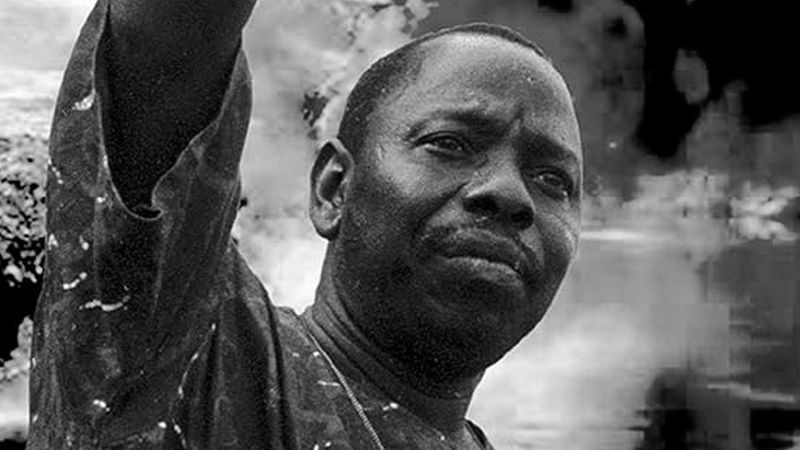
The execution happened quietly in a military prison in Port Harcourt. No television cameras. No public crowd. Just ropes, soldiers, and a government determined to silence a troublesome voice.
But instead of disappearing, Ken Saro-Wiwa became immortal.
Years later, his name still carries anger, admiration, pain, and controversy across Nigeria and beyond. To some, he was a hero who defended the oppressed Ogoni people against environmental destruction. To others in power at the time, he was a dangerous agitator challenging the Nigerian state itself.


Either way, Ken Saro-Wiwa refused to stay silent.
Who Was Ken Saro-Wiwa?
Kenule Beeson Saro-Wiwa, widely known as Ken Saro-Wiwa, was a Nigerian writer, television producer, environmental activist, and political campaigner from Ogoniland in present-day Rivers State.
Born on October 10, 1941, in Bori, he became one of the most internationally recognised Nigerian activists of the late 20th century. He was famous for speaking against environmental pollution, political marginalisation, and the exploitation of oil-producing communities in the Niger Delta.
Many Nigerians first knew him as a successful writer and media personality. Others knew him as the creator of the popular television comedy Basi & Company, one of the biggest Nigerian TV shows of the 1980s.
But history remembers him most for something else — his fearless campaign against environmental destruction linked to oil production in Ogoniland.
That campaign eventually cost him his life.
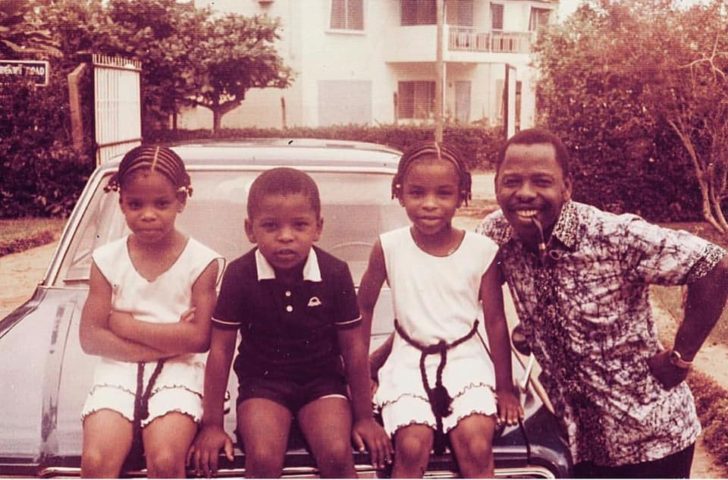
Early Life and Background
Ken Saro-Wiwa was born into an Ogoni family in the Niger Delta during British colonial rule. His father, Jim Wiwa, was a traditional chief and businessman, which gave the family a relatively comfortable background compared to many others in the region.
Growing up in Ogoniland exposed young Ken to both the beauty and struggles of the Niger Delta. The rivers, forests, fishing communities, and farmlands formed a major part of daily life.
At the time, however, crude oil exploration was beginning to transform the region dramatically.
Nobody fully understood yet how deeply oil would alter the Niger Delta politically, economically, and environmentally.
Ken attended Government College Umuahia, one of Nigeria’s elite schools that also educated famous figures like Chinua Achebe. From there, he proceeded to the University of Ibadan, where he studied English.
Even as a student, he was known for his intelligence, confidence, and sharp communication skills.
Those skills would later make him one of Nigeria’s most powerful public voices.
Ken Saro-Wiwa’s Rise as a Writer and Media Personality
Before activism made him globally famous, Ken Saro-Wiwa had already built a strong reputation as a writer.
He worked as a teacher, lecturer, and civil servant during the early years of his career. During the Nigerian Civil War between 1967 and 1970, he served as an administrator in the Bonny area, which placed him directly inside one of Nigeria’s most painful historical periods.
The war deeply affected him.
After the conflict ended, Saro-Wiwa focused increasingly on writing and business. He authored novels, essays, children’s books, and television scripts.
Then came Basi & Company.
If you lived in Nigeria during the 1980s, there is a good chance you heard about the show. The comedy series followed the adventures of Basi, a clever Lagos hustler always searching for “quick money.” The phrase “No condition is permanent” from the show became wildly popular across the country.
Not many people know this, but the massive success of Basi & Company made Ken Saro-Wiwa financially comfortable long before his activism intensified.
He was not protesting because he lacked personal success.
That makes his later choices even more remarkable.
The Niger Delta Crisis and Environmental Activism
Everything changed when Saro-Wiwa focused fully on the condition of the Ogoni people.
By the late 1980s and early 1990s, oil production in the Niger Delta had generated billions of dollars for Nigeria. Yet many oil-producing communities remained poor, underdeveloped, and heavily polluted.
Oil spills damaged rivers and farmlands. Gas flaring polluted the air. Fishing communities struggled to survive.
Meanwhile, many locals believed they received little benefit from the oil extracted from their land.
Ken Saro-Wiwa became one of the loudest voices speaking against this situation.
He accused both the Nigerian government and multinational oil companies — especially Shell — of environmental destruction and exploitation in Ogoniland.
At a time when military governments dominated Nigeria, openly criticising powerful oil interests was extremely risky.
But Saro-Wiwa kept going.
The Movement for the Survival of the Ogoni People (MOSOP)
In 1990, Ken Saro-Wiwa helped establish the Movement for the Survival of the Ogoni People (MOSOP).
The organization demanded environmental protection, political representation, and a fairer share of oil wealth for the Ogoni people.
MOSOP quickly grew into one of the most influential minority rights movements in Nigerian history.
Saro-Wiwa was brilliant at attracting international attention. He gave interviews abroad, spoke to foreign media, and presented the Ogoni struggle as part of a global conversation about environmental justice and human rights.
One of the movement’s biggest moments came in January 1993, when an estimated 300,000 Ogoni people participated in peaceful protests against oil exploitation.
Think about that number for a second.
For a relatively small ethnic group, the protest was extraordinary.
The Nigerian government noticed.
So did the world.
Clash with the Military Government
During the 1990s, Nigeria was under military rule, first under General Ibrahim Babangida and later General Sani Abacha.
Military governments during that era were notorious for suppressing dissent.
Ken Saro-Wiwa’s activism increasingly embarrassed the Nigerian state internationally. Foreign journalists, human rights organizations, and environmental groups began focusing heavily on Ogoniland.
Authorities saw him as a growing threat.
Security forces intensified operations in Ogoni communities. Clashes, arrests, and violence became more common.
Saro-Wiwa himself was arrested multiple times.
Still, he refused to back down.
Imagine being in his shoes. You know powerful forces are angry with you. You know prison is possible. Maybe even death. Yet you continue speaking publicly almost every day.
That level of courage is rare.

The Murder Trial and International Outrage
In 1994, four Ogoni chiefs were murdered during a political meeting. The military government accused Ken Saro-Wiwa and several other MOSOP leaders of involvement in the killings.
Saro-Wiwa denied the accusations completely.
Many international observers believed the trial was deeply flawed and politically motivated. Human rights organizations accused the government of using the charges to silence Ogoni activism permanently.
The case attracted enormous global attention.
Governments, activists, writers, and celebrities around the world demanded clemency. Even leaders who normally avoided criticizing Nigeria publicly became concerned.
But General Sani Abacha’s military government remained unmoved.
Death of Ken Saro-Wiwa
On November 10, 1995, Ken Saro-Wiwa and eight other Ogoni activists, later known as the Ogoni Nine, were executed by hanging in Port Harcourt.
Nigeria erupted with outrage.
International reaction was even harsher.
Several countries condemned the executions strongly. Nigeria faced diplomatic isolation and was suspended from the Commonwealth shortly afterward.
For many Nigerians, the execution became one of the darkest moments of the military era.
Ken Saro-Wiwa was only 54 years old.
Yet even in death, his voice became louder internationally than it had ever been while he was alive.
Legacy and Impact of Ken Saro-Wiwa
Today, Ken Saro-Wiwa remains one of Africa’s most famous environmental activists.
His struggle helped bring global attention to environmental degradation in the Niger Delta and influenced international discussions around corporate responsibility, oil pollution, and indigenous rights.
Many activists across Africa still cite him as an inspiration.
His writings also continue to matter. Beyond politics, Saro-Wiwa was genuinely gifted as a storyteller and communicator.
Even decades later, environmental problems in the Niger Delta remain unresolved in many areas. Oil spills, pollution, poverty, and underdevelopment still affect communities across the region.
That reality keeps Ken Saro-Wiwa’s message painfully relevant.
Thanks for reading, OldNaija.com.
References:
- Banham, Martin, et al. African Theatre in Development. Indiana University Press, 1999.
- Na’Allah, Abdul Rasheed. Ogoni’s Agonies: Ken Saro-Wiwa and the Crisis in Nigeria. Carolina Academic Press, 1998.
- Omipidan, T. (2020, May 5). What you need to know about General Sani Abacha, his iron regime and death – OldNaija. OldNaija. https://oldnaija.com/2018/08/18/what-you-need-to-know-about-general-sani-abacha-his-iron-regime-and-death/
- Ken Saro-Wiwa – Goldman Environmental Prize. (2023, June 8). Goldman Environmental Prize.
- Saro-Wiwa, Ken. A Month and a Day: A Detention Diary. Penguin Books, 1995.
- Saro-Wiwa, Ken. On a Darkling Plain: An Account of the Nigerian Civil War. Saros International Publishers, 1989.
Questions? Advert? Click here to email us.

You made a typo about his birth date in the first paragraph. He was born in 1941 not 1995.