

Complete Timeline of Nigerian History: Pre-Colonial Era Till Date
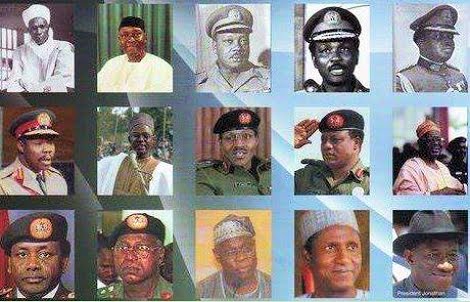
The history of Nigeria is as vast and diverse as its people. From the early Nok culture, known for its striking terracotta art, to the powerful Benin and Oyo kingdoms, Nigeria has long been home to advanced civilizations.
Over the centuries, it witnessed the rise of empires, the impact of the transatlantic slave trade, British colonial rule, the struggle for independence, and several challenges that comes with building a nation. Below is a complete timeline of Nigerian history as well as links to relevant articles on our website for further reading.
Early Civilizations and Kingdoms (Before 1500)
c. 11,000 BC – Some of the earliest humans in West Africa lived in caves at Iwo Eleru (Ondo State).
c. 500 BC – 200 AD – The Nok culture thrived in central Nigeria, famous for terracotta sculptures and pioneering iron smelting.
c. 800–1000 AD – The Igbo-Ukwu people created intricate bronze, copper, and glass works, showing advanced artistry and trade links.
11th century – The Kanem-Bornu Empire emerged around Lake Chad, becoming a powerful Islamic and trading empire.
12th–15th centuries –
- The Oyo Empire expanded in the southwest under the Alaafins.
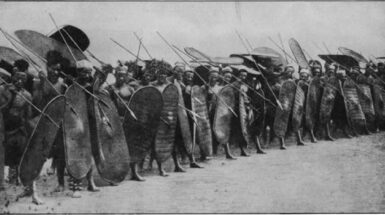
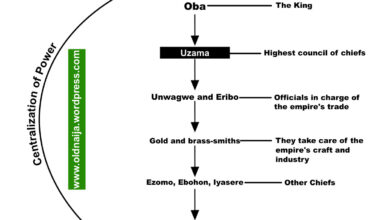
- The Benin Kingdom grew into a strong centralized state, ruled by Obas and known for its bronze and ivory artworks.
- The Hausa city-states (Kano, Katsina, Zaria, etc.) flourished as centers of commerce, craft, and Islamic learning.
Contact with Europe and the Slave Trade (1500s–1800s)
1472 – Portuguese explorers reached the Nigerian coast, marking the beginning of European contact.
16th–18th centuries – The transatlantic slave trade dominated the region. Nigerian ports like Badagry, Bonny, and Calabar became major slave-export hubs, fueling wars and raids inland.
1804–1808 – Usman dan Fodio launched the Sokoto Jihad, creating the Sokoto Caliphate, which united much of the north under Islamic rule.
Early 1800s – The once-powerful Oyo Empire collapsed, leading to decades of Yoruba civil wars.
Colonial Conquest and Rule (1800s–1960)
1807 – Britain outlawed the slave trade and pushed for “legitimate commerce” like palm oil exports.
1861 – Britain annexed Lagos as a colony.
1884–1885 – At the Berlin Conference, European powers partitioned Africa, with Britain claiming present-day Nigeria.
1900 – Britain took control from the Royal Niger Company, formally establishing the Protectorates of Northern and Southern Nigeria.
1914 – Governor Lord Lugard amalgamated the two protectorates into one entity called Nigeria.
1922 – The Clifford Constitution introduced elections in Lagos and Calabar, giving a few Nigerians a voice in politics.
1930s–40s – Nationalist movements gathered momentum, led by figures such as Nnamdi Azikiwe, Obafemi Awolowo, and Ahmadu Bello.
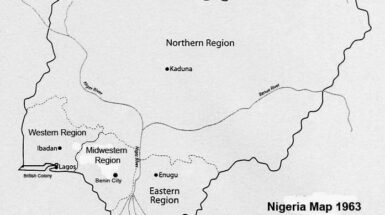
1946 – The Richards Constitution introduced regional divisions: North, West, and East.
1951 – The Macpherson Constitution expanded regional assemblies’ powers and created a central House of Representatives. It was more inclusive, with more Nigerians participating in governance.
1954 – The Lyttleton Constitution established a true federal system, dividing powers between the center and the regions.
1957 – Eastern and Western regions became self-governing.
1959 – The Northern region followed suit; nationwide elections were held in preparation for independence.
Independence and the First Republic (1960–1966)
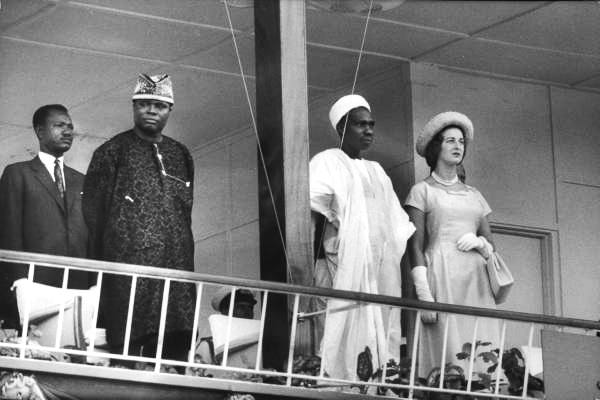
1 October 1960 – Nigeria gained independence from Britain.
- Sir Abubakar Tafawa Balewa became Prime Minister.
- Nnamdi Azikiwe became Governor-General (later President).
1963 – Nigeria became a Republic, with Azikiwe as the first President.
1964 – Federal elections were plagued by violence and allegations of fraud.
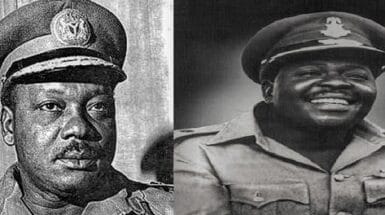
15 January 1966 – Nigeria’s first military coup toppled the government. Prime Minister Balewa was killed, and Major-General Johnson Aguiyi-Ironsi became Head of State.
July 1966 – A counter-coup brought Yakubu Gowon to power. Ethnic violence worsened, especially between the North and East.
Civil War and Military Rule (1967–1999)
1967–1970 – The Eastern Region declared independence as the Republic of Biafra, sparking the Nigerian Civil War. The conflict lasted nearly three years and caused over a million deaths, mostly from famine. Nigeria remained united after Biafra’s defeat.
1975 – Gowon was overthrown. Murtala Mohammed took over but was assassinated in 1976. His successor, Olusegun Obasanjo, continued his reforms and promised democracy.
1979 – Nigeria returned to civilian rule with the Second Republic. Shehu Shagari became President.
1983 – Amid corruption and economic decline, the military struck again. Muhammadu Buhari took power.
1985 – Buhari was overthrown by Ibrahim Babangida, who introduced the Structural Adjustment Program (SAP), bringing hardship to many Nigerians.
1993 – Presidential elections, widely believed to have been won by M.K.O. Abiola, were annulled by Babangida, triggering outrage. Ernest Shonekan briefly led an interim government before being pushed aside by General Sani Abacha.
1993–1998 – Abacha ruled harshly, jailing opponents (including Abiola) and suppressing dissent.
1998 – Abacha died suddenly. General Abdulsalami Abubakar took over and began a rapid transition to democracy.
The Fourth Republic (1999–Present)
1999 – Nigeria returned to democracy. Olusegun Obasanjo was elected President, beginning the Fourth Republic.
2007 – Umaru Musa Yar’Adua became President but died in 2010, after which Goodluck Jonathan assumed office.
2015 – Muhammadu Buhari was elected President, marking the first peaceful handover of power between different parties in Nigeria’s history.
2023 – Bola Ahmed Tinubu became President after the general elections, continuing the democratic process.
By following this timeline of Nigerian history, we can better understand how past struggles, achievements, and transitions continue to influence Nigeria’s present and future. Thanks for your time, OldNaija.com
References:
- Kirk-Greene, Millard, A. H., Ajayi, Ade, J., Falola, & O, T. (2023, October 27). History of Nigeria | Events, people, dates, maps, & facts. Encyclopedia Britannica. https://www.britannica.com/topic/history-of-Nigeria/Nigeria-as-a-colony
- Omipidan, T. (2023, November 2). The First Republic in Nigeria and its collapse (1960-1966) – OldNaija. OldNaija. https://oldnaija.com/2019/09/15/the-first-republic-in-nigeria-and-its-collapse-1960-1966/
- Encyclopaedia Britannica. (n.d.). History of Nigeria. Overview of ancient cultures (Nok, Igbo-Ukwu), empires (Benin, Oyo, Kanem-Bornu), and colonial and post-colonial developments
- Omipidan, T. (2021, February 24). Real Account of the June 12 1993 Presidential Election and why it was Annulled – OldNaija. OldNaija. https://oldnaija.com/2016/12/21/june-12-1993-presidential-elections/
Questions? Advert? Click here to email us.