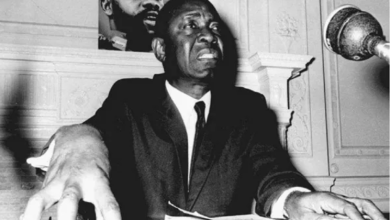


Herbert Macaulay: The Fearless Nationalist Who Challenged British Rule in Nigeria
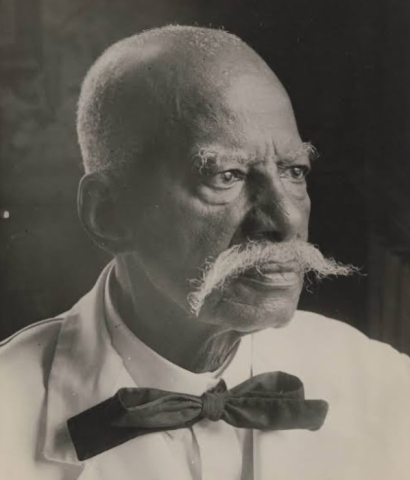
Long before Nigeria gained independence in 1960, one man was already shaking the British Empire with newspapers, protests, speeches, and pure stubborn courage. His name was Herbert Macaulay.
At a time when many Nigerians feared colonial authorities, Macaulay openly challenged them. He criticised unfair taxes, exposed land seizures, defended ordinary Lagosians, and became the loudest political voice against British rule in colonial Nigeria.
Some people called him troublesome. Others called him dangerous. But to many Nigerians, Herbert Macaulay became something else entirely — the father of Nigerian nationalism.
Imagine standing up to the most powerful empire in the world in the early 1900s, when Nigerians had little political power and almost no voice. That was Herbert Macaulay’s reality.
Who Was Herbert Macaulay?
Herbert Samuel Heelas Macaulay was born on November 14, 1864, in Lagos. He was a Yoruba man from an educated and influential family deeply connected to the early history of colonial Lagos.
His father, Thomas Babington Macaulay, founded one of the earliest secondary schools in Nigeria, while his mother was the daughter of Bishop Samuel Ajayi Crowther, the famous ex-slave who became the first African Anglican bishop.
Herbert Macaulay grew up during a period when British influence in Lagos was expanding rapidly. Western education, Christianity, trade, and colonial administration were reshaping society. But beneath the surface, many Nigerians were unhappy with the growing control of the British government over their lands and traditions.
Although Macaulay was trained as an engineer and surveyor, history remembers him for something much bigger. He became Nigeria’s first major nationalist politician and one of the earliest Nigerians to organise resistance against colonial rule openly.
His activism helped awaken political consciousness in Nigeria decades before independence became realistic.
Early Life and Background of Herbert Macaulay
Herbert Macaulay was born into privilege compared to many Nigerians of his era. He attended CMS Grammar School in Lagos, one of the earliest schools established by missionaries. He was brilliant, confident, and outspoken from a young age.
Not many people know this, but Macaulay originally worked for the colonial government. In 1890, he travelled to England to study civil engineering and music at Plymouth. After returning to Lagos, he got a job as a surveyor in the colonial service.
But things soon changed.
Macaulay became frustrated with the racism and discrimination inside the colonial administration. African officials were often treated as inferior to Europeans, regardless of education or competence. Promotions were limited, respect was scarce, and British officials controlled almost everything.
By 1898, he resigned from government service.
That resignation changed Nigerian history.
Instead of working for the colonial government, Herbert Macaulay decided to fight it.
Herbert Macaulay and the Rise of Nigerian Nationalism
One of Herbert Macaulay’s earliest political battles involved land rights in Lagos.
The British colonial government frequently seized lands from traditional chiefs and local communities under various legal excuses. Many Lagosians felt powerless. But Macaulay stepped in.
Using his knowledge as a surveyor and his understanding of colonial laws, he defended traditional landowners and publicly attacked British policies. He became especially close to the Eleko of Eko (the traditional ruler of Lagos), Oba Eshugbayi Eleko.
This alliance made Macaulay extremely popular among ordinary Lagosians, especially the indigenous elites who feared losing their lands and authority.
The British authorities, however, saw him as a dangerous agitator.
Herbert Macaulay and the Lagos Daily News
In 1925, Herbert Macaulay founded the Lagos Daily News, one of Nigeria’s earliest nationalist newspapers.
This was a huge deal in colonial Nigeria.
Remember, newspapers at the time were powerful political weapons. There was no social media, no radio debates, no television interviews. Newspapers shaped public opinion. Through the Lagos Daily News, Macaulay criticised colonial injustice, exposed corruption, and encouraged Nigerians to demand political representation.
His writing was bold and confrontational. Sometimes sarcastic too.
British officials hated it.
But Nigerians loved it.
The newspaper helped spread nationalist ideas across Lagos and beyond, inspiring a new generation of politically conscious Nigerians.
Formation of the Nigerian National Democratic Party (NNDP)
In 1923, Herbert Macaulay founded the Nigerian National Democratic Party (NNDP), widely regarded as Nigeria’s first political party.
You might be wondering why this mattered so much.
At the time, Nigerians had very limited participation in government. The Clifford Constitution of 1922 introduced a tiny form of elective representation in Lagos and Calabar, but political power remained firmly in British hands.
Macaulay saw an opportunity.
The NNDP contested elections and dominated Lagos politics for years. The party focused on education, African representation in government, economic opportunities for Nigerians, and opposition to unfair colonial policies.
For many Nigerians, this was the first time organised politics became a serious tool for demanding rights.
Herbert Macaulay’s Political Style
Herbert Macaulay was not a quiet intellectual sitting in an office all day.
He was dramatic. Charismatic. Clever. Sometimes controversial.
He knew how to connect with ordinary people in Lagos. He attended social gatherings, interacted with market women, and understood street politics long before modern politicians mastered it.
Some historians even describe him as one of Nigeria’s earliest populists.
He also had a rebellious streak. Macaulay enjoyed mocking colonial authorities publicly, which made him extremely popular among anti-colonial Nigerians.
At one point, the British imprisoned him over allegations connected to financial misconduct involving estate matters. His enemies hoped this would destroy his reputation.
Instead, many Lagosians saw him as a victim of colonial persecution.
Ironically, the prison sentence increased his popularity.
Herbert Macaulay and Nnamdi Azikiwe
By the 1930s and 1940s, a younger generation of nationalists was emerging. One of them was Nnamdi Azikiwe, popularly known as “Zik.”
At first, there were political tensions between Macaulay’s NNDP and Azikiwe’s growing nationalist movement. But eventually, both men realised they shared a common goal — ending colonial domination.
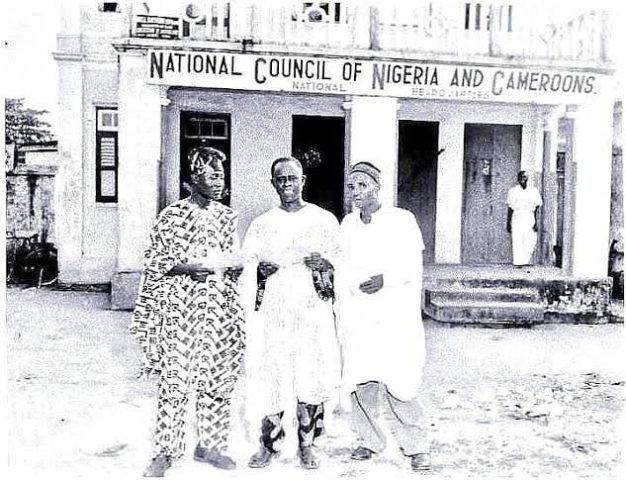
In 1944, Herbert Macaulay and Nnamdi Azikiwe jointly founded the National Council of Nigeria and the Cameroons (NCNC).
This became one of the most influential nationalist organisations in Nigeria’s history.
The formation of the NCNC united older Lagos-based nationalism with a broader pan-Nigerian movement. It marked a turning point in the struggle for independence.
Challenges and Controversies
Herbert Macaulay’s life was filled with battles.
The British colonial government constantly monitored him. They viewed him as an instigator capable of stirring public unrest.
He also faced criticism from some educated elites who considered his methods too confrontational or populist. To his critics, Macaulay was sometimes overly dramatic and politically opportunistic.
But Macaulay understood something many others did not: politics was not only about intellectual debates. It was about mobilising ordinary people.
And he was very good at that.
There were also personal tragedies in his life. His wife, Caroline Pratt, died relatively early in their marriage, leaving him emotionally devastated. Friends reportedly said he never fully recovered from her death.
Despite everything, Herbert Macaulay continued fighting colonial policies almost until the end of his life.
It is almost impossible to discuss Nigerian nationalism without mentioning Herbert Macaulay.
Before figures like Obafemi Awolowo, Ahmadu Bello, Tafawa Balewa, and Nnamdi Azikiwe became household names, Macaulay had already laid the foundation for organised resistance against colonial rule.
He transformed anti-colonial frustration into political action.
Many historians call him the “Father of Nigerian Nationalism” because he helped awaken political consciousness among Nigerians during the colonial era.
Today, his legacy can still be seen across Nigeria. Herbert Macaulay Way in Lagos is named after him. His face once appeared on the one-naira note. Nigerian students still study his role in nationalist history.
Without Herbert Macaulay, Nigeria’s independence movement might have developed much later and far more slowly.
His Death
Herbert Macaulay died on May 7, 1946, in Lagos at the age of 81.
His death was a major moment in Nigerian political history. Thousands of Nigerians mourned him. Even many who disagreed with him politically respected the role he played in challenging colonial authority.
Thanks for reading, OldNaija.com
REFERENCES:
- Azikiwe, N. (1961). Zik: A selection from the speeches of Nnamdi Azikiwe. Cambridge University Press.
- Awolowo, O. (1947). Path to Nigerian freedom. Faber and Faber.
- Omipidan, T. (2025, August 21). Nigerian National Democratic Party (NNDP) – first political party in Nigeria – OldNaija. OldNaija. https://oldnaija.com/2020/03/30/nigerian-national-democratic-party-nndp-first-political-party-in-nigeria/
- Falola, T. (1999). The history of Nigeria. Greenwood Press.
- Team, S. (2023, August 29). Objectives of the National Council of Nigeria and the Cameroons (NCNC). Student PADI.
- Baker, P. (1974). Urbanization and political change: The politics of Lagos, 1917–1967. University of California Press.
Questions? Advert? Click here to email us.