


The Nigerian Council of Lord Lugard: Origins, Role, and Limits
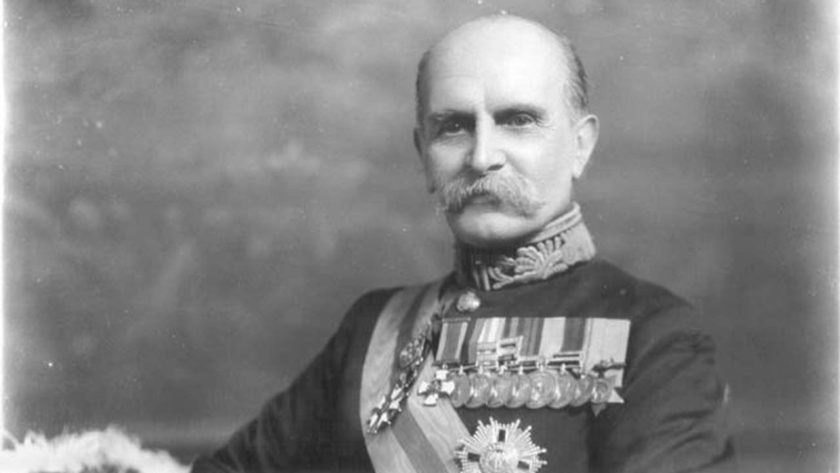
The creation of the Nigerian Council of Lord Lugard in 1914 followed one of the most important turning points in Nigeria’s colonial history—the amalgamation of the Northern and Southern Protectorates.
Lord Frederick Lugard, Nigeria’s first Governor-General, introduced the council as part of his plan to administer the newly unified territory.
On paper, it looked like a step toward consultation. In practice, its influence was limited, and its shortcomings soon became clear.


Why the Council Was Created
After amalgamation, Britain needed a structure that could bring together different interests across the vast colony.
The Nigerian Council of Lord Lugard was meant to serve that purpose. It was designed as a forum where colonial officials, European commercial interests, and selected African representatives could discuss matters affecting Nigeria as a whole.
However, it’s important to be clear from the start: the council was never intended to govern. It was advisory, not legislative, and it did not control public finances. Real power remained firmly in the hands of the governor and the colonial administration.
Composition of the Council
Membership of The Nigerian Council of Lord Lugard reflected the colonial hierarchy of the time. The council had a total of 36 members—24 official members and 12 unofficial members.
The official members were senior colonial officers. They included members of the Executive Council, first-class residents, political secretaries, and the secretaries of both the Northern and Southern Provinces. These officials represented the machinery of colonial rule and largely controlled the direction of discussions.
The unofficial members were split evenly between Europeans and Africans. Six Europeans represented key economic interests such as commerce, shipping, banking, mining, and chambers of commerce. Their presence ensured that British commercial priorities were well protected.
The six African members included prominent traditional rulers such as the Sultan of Sokoto, the Alaafin of Oyo, the Emir of Kano, and Chief Dogho Numa of the Niger Delta. They were joined by a few educated Nigerians, mainly from Lagos and Calabar, who had some exposure to Western education and colonial administration.
Advisory in Name, Powerless in Practice
Despite its diverse membership, the Nigerian Council of Lord Lugard had no real authority. It could not pass laws. It could not approve budgets. It could not compel the government to act on its recommendations. At best, it served as a channel for expressing opinions, though even that role was weak.
Many of the traditional rulers on the council didn’t see themselves as active participants in colonial policy discussions. Their authority was rooted in their local domains, not in a central colonial forum where decisions had already been made. Attendance often felt ceremonial rather than meaningful.
Educated Nigerians in the unofficial category also struggled to make an impact. They were too few in number and lacked the power to challenge official members.
When they did raise concerns, those views could easily be ignored. As a result, the council failed to become an effective voice for African interests.
Public Opinion and Its Limits
One of the stated purposes of the Nigerian Council of Lord Lugard was to reflect public opinion. In reality, it did so poorly. The council did not represent the wider Nigerian population, most of whom had no say in how members were selected.
Debates within the council rarely translated into policy changes, and ordinary Nigerians remained largely excluded from governance.
This disconnect made the council increasingly irrelevant, especially as nationalist ideas began to grow in the early 20th century.
Abolition and the Clifford Reforms
By 1922, the weaknesses of the council were hard to ignore. That same year, Sir Hugh Clifford succeeded Lord Lugard as Governor of Nigeria. Clifford believed that the Nigerian Council of Lord Lugard had outlived its usefulness. He abolished it and introduced a new Legislative Council.
The new council applied only to the Southern Protectorate and included elected African members for the first time, particularly from Lagos and Calabar. While still limited, it marked a shift toward broader participation in colonial governance.
The Northern Protectorate, however, was excluded from this reform. It continued to be governed by proclamations issued directly by the governor.
Although short-lived and largely ineffective, the Nigerian Council of Lord Lugard remains an important part of Nigeria’s constitutional history.
Thanks for reading, OldNaija.com
References:
- OldNaija. (n.d.). Constitutional development in Nigeria Archives – OldNaija. https://oldnaija.com/tag/constitutional-development-in-nigeria/
- Omipidan, T., & Omipidan, T. (2023c, November 2). Colonial Rule in Nigeria and Nigeria’s Struggle for Independence. OldNaija. https://oldnaija.com/2014/11/05/colonial-rule-in-nigeria-and-nigerias-struggle-for-independence/
Questions? Advert? Click here to email us.




Thanks, for this post.
I was taught in govt. when i was still in secondary school but the explanation is not as much as this.
You’re welcome, MR BOOK WORM. As your name suggests, OldNaija is meant for you.
Thanks for this post; it is educative and quite inspiring as well as historical indeed. once again’ thanks for this post
You are welcome, Mr. Joseph Dudu. Thanks for the time you spared to read our article. Stay tuned to OldNaija and get updated.
Well detailed post. keep it up
Thank you, Mr. Martins. Kindly do check back.
fantastic keep it up
Thanks for visiting and dropping such a nice comment, Mr. Adeniyi Israel. Kindly do check back.