

Skill vs Chance: A Look at the Most Strategic Casino Games
Mastering the Tables: Games Where Your Decisions Matter
The Art of Strategy in Blackjack and Card Counting
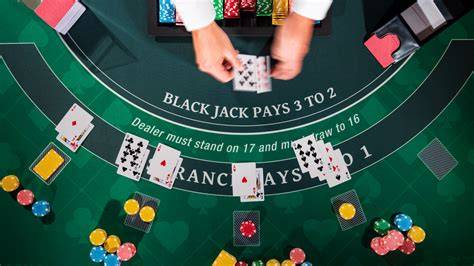
Blackjack is a fast-paced and exciting card game where each player competes against the dealer, aiming to get as close to 21 points as possible—without going over. The game kicks off with both the player and the dealer receiving two cards each. Players can see both of their own cards and one of the dealer’s cards, which helps them decide their next move.
Players can choose to:
- Hit (take another card),
- Stand (keep their current hand),
- Double down (double the bet and take one more card),
- Split (if dealt a pair, play them as two separate hands).
For example, if you’re dealt two eights, you can split them and play two hands separately, increasing your chances of winning.
Winning happens in two main ways:




- You get exactly 21 points — this is called a Blackjack.
- You end up with a higher total than the dealer, without going over 21.
If your hand exceeds 21, that’s called a bust, and you lose the round instantly—regardless of the dealer’s hand.
Know the Dealer’s Rules
The dealer doesn’t make decisions like players do—they follow fixed rules:
- They must draw cards until they reach at least 17 points.
- Once they hit 17 or more, they must stop.
This makes the dealer’s actions predictable, giving players the opportunity to build a solid strategy.
Why Players Love Blackjack on 1xbet nigeria
Blackjack stands out from other casino games because it combines luck with real decision-making and skill. Here’s what makes it so appealing:
- Basic Strategy Tools: There are well-researched charts and strategies that show the best moves for different card combinations.
- Tactical Gameplay: Choosing whether to hit, stand, double, or split gives the player more control over the outcome.
- Player Advantage: Unlike games purely based on chance, blackjack rewards smart choices, making it ideal for strategic thinkers.
In short, blackjack is perfect for players who enjoy both the thrill of gambling and the challenge of thinking ahead. It’s more than luck—it’s a game where smart decisions can lead to consistent wins.
Poker: Where Psychological Skill Meets Mathematical Odds
In poker, victory doesn’t always belong to the player with the best cards—it goes to the one who uses their hand most wisely. It’s a game where discipline often outweighs luck, and the mindset of a player can be just as important as the mathematics behind each move.
In many ways, poker mirrors the calm and focus found in Eastern philosophy. A successful player must master their emotions—like a Zen monk at the table: calm, focused, and unshaken. The ability to remain unreadable while decoding the emotions and intentions of others is what separates average players from true masters.
Poker exists at the intersection of logic and intuition. Players calculate odds, evaluate probabilities, and assess every move with precision. But often, the final decision comes down to instinct—a quiet inner voice that guides the hand. It’s not unlike the creative process in art: while inspiration is vital, it means little without technique.
- Mathematics is your palette
- Intuition is your brush
- Strategy is the canvas
Together, they create the masterpiece of your game.
Every action at the poker table is a decision made in the face of uncertainty. Do you take the risk or fold and wait? Do you bluff with confidence or show your strength honestly? These aren’t just in-game choices—they reflect deeper life principles.
Poker teaches more than just gameplay. It reveals character. It challenges how we deal with risk, how we respond to loss, and whether we can forgive our own mistakes. It demands accountability and rewards clarity of thought.
For many African players, poker is more than a game—it’s a mental arena where strategy meets soul. It sharpens not only your skills, but your self-awareness. And in that battle of minds and wills, true growth happens.
Beyond Luck: Understanding the Element of Control
How Player Choice Directly Influences the House Edge
The moment you open an online casino—whether on your mobile phone or computer—you’re faced with a familiar dilemma: Which game should I play? Maybe the slot you’ve been spinning no longer excites you. Or perhaps you’re simply in the mood for something new. As you scroll through the endless library of games, the sheer number of choices can feel overwhelming.
For slot lovers, this decision isn’t just about the theme or graphics. There’s a whole layer of strategy involved:
- What’s the grid size?
- Are there bonus features?
- How are the paylines structured?
- Is there a free spins round or a progressive jackpot?
- How does the volatility align with your risk appetite?
All these small details can drastically change the experience—turning a casual spin into an unpredictable thrill ride.
The Classics Aren’t So Simple Either
Even with traditional casino games like Blackjack, Roulette, Baccarat, or Craps, the variety can be just as dizzying. You’ll find multiple versions of each:
- Rule variations
- Side bets
- Special jackpot editions
- Table limits tailored for both casual and high-stakes players
For Nigerian players using bankroll strategies, the table limit isn’t just a detail—it’s a crucial factor that shapes your entire approach.
What If You’re On a Losing Streak?
Maybe you have a go-to game. One that’s been good to you in the past. But now, the wins aren’t coming, and doubt starts to creep in. You wonder:
- Did I choose the wrong game today?
- Would I be luckier if I switched to something else?
- Should I stick with this game and wait for the RTP to play out?
This is the heart of the casino choice paradox—you constantly question your decision, especially when things aren’t going your way.
In-Game Decisions Bring More Complexity
Even once you’ve picked your game, the paradox continues:
- Should you increase your bet or play it safe?
- Stick with the same strategy or try something new?
- Play another round or call it a day?
These questions don’t just affect your bankroll—they influence your confidence, focus, and overall enjoyment.
The Difference Between Short-Term Variance and Long-Term Skill
When it comes to casino games—especially strategic ones like poker, blackjack, or even certain types of slots—it’s important to understand the difference between short-term variance and long-term skill. These two concepts can make or break your mindset, especially if you’re serious about improving your results over time.
Short-Term Variance: The Role of Luck
Short-term variance refers to the unpredictable ups and downs that happen in any game of chance. You could make the perfect move, follow your strategy to the letter—and still lose. Why? Because randomness plays a major role in the short run.
- In poker, you might get all your chips in with the best hand and still lose to a lucky river card.
- In blackjack, you might play basic strategy and watch the dealer hit 21 over and over.
- In slots, even high RTP games can go cold for dozens or even hundreds of spins.
Variance doesn’t care how skilled you are. In the short term, luck can disguise your true level of play.
Long-Term Skill: The Power of Strategy
Over time, however, skill starts to show. Good decisions made consistently over hundreds or thousands of hands (or spins, or rounds) begin to outweigh the randomness.
- In poker, skilled players profit by exploiting weak opponents and managing risk.
- In blackjack, card counters and optimal strategy users reduce the house edge.
- In bankroll management, disciplined players avoid tilt and stay in the game longer.
The longer you play with discipline and solid strategy, the more your true skill level shines through—and the closer your results align with statistical expectations.
How to Balance the Two
If you’re a Nigerian player new to strategic gaming, or trying to level up, here’s how to keep the right mindset:
- Respect Variance: Losing streaks don’t always mean you’re playing badly. Winning streaks don’t always mean you’re a genius.
- Focus on Decision Quality: Instead of obsessing over results, review your choices. Did you make the +EV (positive expected value) move?
- Track Your Play: Keep records. Over time, patterns will emerge, and you’ll see whether your strategy holds up.
- Stay Mentally Strong: Emotional control is a long-term skill too. Don’t let short-term outcomes shake your confidence.
Tools to Develop Your Gaming Strategy
Utilizing Practice Tables and Free-Play Modes
For players exploring the world of online casino games, free play modes and practice tables offer a risk-free way to dive into the action. These demo environments allow users to experience the full game — whether it’s slots, blackjack, roulette, or poker — without the need to create an account or risk any money.
Instant Access, No Sign-Up Required
One of the biggest advantages of no-registration gaming is the immediate access it provides. There’s no need to fill out lengthy forms, verify your email, or wait for approval. You simply launch the game and start playing — perfect for those who value their time and want to enjoy the experience without unnecessary delays.
This is especially convenient for players who just want to explore a few games or test their interest in online casinos without making any long-term commitments.
Stay Private, Stay Protected
In today’s digital age, data privacy is more important than ever. Free play modes that don’t require registration allow users to stay anonymous — no personal details, no email addresses, no risk of spam or unwanted messages. You can enjoy your favourite games without worrying about your data being stored or shared.
This level of privacy is appealing to players who prefer to stay under the radar while they explore or experiment with different games and strategies.
Learn, Experiment, and Prepare
Free play is more than just entertainment — it’s a valuable training ground. Whether you’re learning the basic rules of roulette, practicing a new blackjack strategy, or testing out slot volatility, demo modes let you do it all without financial pressure.
For beginners, this is the perfect entry point into the world of online casinos. You can:
- Test different game types
- Understand betting mechanics
- Try out various strategies
- Build confidence before wagering real money
There’s no risk, but plenty to gain — especially if your goal is to eventually play smarter with real stakes.
The Smart Way to Start
Platforms like 1xBet offer a wide range of demo games and practice tables designed to help players learn, improve, and enjoy — all at their own pace. Whether you’re testing your luck or sharpening your skills, free play is a smart first step into the world of online gaming.
Remember: Every expert was once a beginner — and every winning strategy starts with practice.
Analyzing Hand Histories and Probability Charts
If you’re serious about improving your performance at the blackjack table, one of the smartest steps you can take is learning how to analyze past hands and apply probability-based strategy charts. Just like poker players rely on starting hand charts, blackjack players can greatly reduce the house edge by following mathematically optimized decision guides.
These blackjack strategy charts are built using computer simulations of millions of hands. They tell you the statistically best move in any given situation — based on two key factors:
- Your current hand total
- The dealer’s visible card
This removes guesswork and emotion from your decisions and replaces them with a data-driven approach to maximize long-term returns.
Understanding Hand Types: Hard vs. Soft
Before using these charts effectively, it’s important to understand two fundamental hand types:
- Hard Hands
These are hands that do not include an Ace, or where the Ace must be counted as 1 to avoid busting. For example, a hand of 10 + 7 is a hard 17. The total is fixed, and you can’t adjust it mid-play. - Soft Hands
These include an Ace that can be counted as either 1 or 11, depending on what’s most advantageous. For instance, Ace + 6 is a soft 17. This flexibility gives players more options and influences when to hit, stand, or double down.
Each type requires a different strategic approach, and the basic strategy chart reflects those differences clearly.
Relying on instincts or copying other players at the table won’t get you far in blackjack. But with strategy charts:
- You’re making moves based on probability, not superstition.
- You learn when to hit, stand, double down, or split based on thousands of tested outcomes.
- You minimize the casino’s edge, potentially bringing it down to less than 1% over the long run.
Over time, reviewing your hand histories—especially in online blackjack where you can track your sessions—allows you to spot patterns, identify mistakes, and fine-tune your strategy even further.
The Pure Chance Spectrum: Recognizing Games of Luck
The Unchangeable Odds of Slots and Roulette
In the world of casino gaming, slots and roulette are two of the most iconic and widely played games. They’re exciting, fast-paced, and accessible to players of all experience levels. But beneath the surface fun lies a crucial concept that every smart player should understand:
Roulette: Pure Probability in Motion
Whether you’re playing European Roulette (with one zero) or American Roulette (with both zero and double zero), the outcome of each spin is governed by pure probability.
For example:
- In European roulette, the chance of hitting a single number (like 17) is 1 in 37, or roughly 2.70%.
- In American roulette, it’s 1 in 38, or about 2.63%, due to the extra “00”.
No matter how many times a number has or hasn’t hit recently, the odds for each spin remain exactly the same. The wheel has no memory. Strategies like betting on “due” numbers or alternating red/black may feel logical, but they do not influence the result. Every spin is independent.
Slots: RNG and Locked-In Outcomes
Slot machines operate on a different system but are just as rigid in their fairness structure. Every spin on a slot is powered by a Random Number Generator (RNG) — a computer algorithm that ensures each spin is independent and random.
Important facts about slots:
- You can’t predict or influence a winning spin.
- The machine’s Return to Player (RTP) and volatility are programmed into its design.
- Whether you just won or just lost, your odds on the next spin are unchanged.
For instance, a slot may have an RTP of 96%, meaning over the long term, it’s designed to return 96 credits for every 100 wagered. But that’s across millions of spins — not your individual session.
Understanding the fixed nature of odds doesn’t mean you’re powerless. It means you can:
- Set realistic expectations
- Manage your bankroll wisely
- Choose games with better odds (e.g., European over American roulette)
- Focus on entertainment value, not guaranteed profit
Why Some Games Remain Fundamentally Random
At the heart of almost every casino game — whether it’s slots, roulette, blackjack, or even video poker — lies a simple but powerful concept: randomness. This isn’t just a design choice; it’s a foundational part of what makes casino games fair, exciting, and unpredictable.
What Is a Random Number Generator (RNG)?
A Random Number Generator, or RNG, is a specialized software algorithm that creates random outcomes. It’s the technology that decides:
- Which symbols land on a slot machine,
- Where the roulette ball stops,
- What cards appear in a virtual deck.
And here’s the key point: neither the casino operator, the game developer, nor the player can know or influence the outcome.
The RNG ensures that every result is completely independent of the previous one — there are no patterns, no cycles, and no way to predict the next move. This is what keeps the game honest.
Built on Proven Science and Security
Modern RNG systems are incredibly advanced. The algorithm most commonly used today — including by trusted platforms like 1xBet — is based on the MD5 128-bit encryption standard, originally developed by a professor at the Massachusetts Institute of Technology (MIT). That same level of encryption is trusted in:
- Computer security systems
- Banking software
- Data protection tools
So, when you spin a slot or play a digital game at 1xBet, you’re relying on a system that’s as secure as those used in global cybersecurity networks.
When you play at 1xBet, every spin, roll, or deal is powered by cutting-edge RNG technology — the same kind used in secure industries around the world. It’s not about the casino “choosing” the result — it’s about giving every player a fair and random chance, every single time.
So next time you’re chasing that jackpot or watching the roulette wheel spin, remember: you’re playing a game backed by science, tested by time, and built for fairness.
Questions? Advert? Click here to email us.