


Yoruba Tribal Marks: History, Types and Cultural Significance
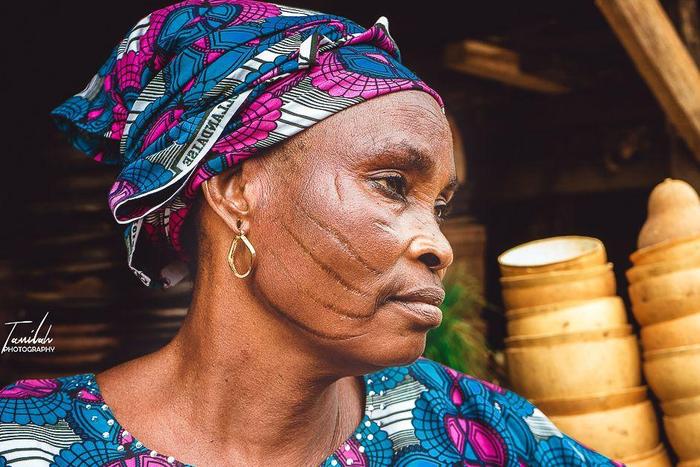
Ila (tribal or facial marks) was a common traditional practice among the Yoruba people of southwestern Nigeria. The marks, which are permanent scars made on the skin, were usually inscribed on the faces or bodies of children during infancy or childhood.
Yoruba tribal marks served different purposes. One of their main functions was to identify a person’s family, lineage or subgroup. They were also associated with beauty, social identity and, in some cases, social status. In the past, facial marks could help people recognise members of particular families, especially during periods of war, displacement and the slave trade.
Some forms of body marking were also linked to traditional beliefs and practices. For instance, certain marks were associated with traditional healing and religious beliefs. However, not all forms of skin marking served the same purpose, and they should not be confused with the facial patterns used to identify Yoruba families and lineages.


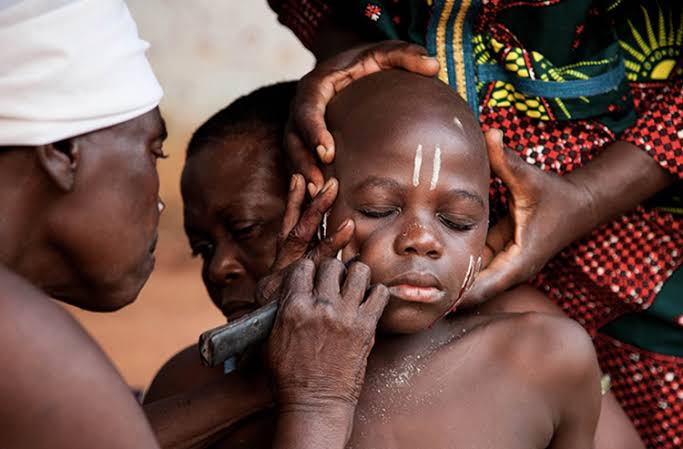
Tribal marks were generally given to children before they were old enough to decide whether they wanted them. In some families, the patterns were passed down through generations, making them an important part of family identity.
How Were Yoruba Tribal Marks Made?
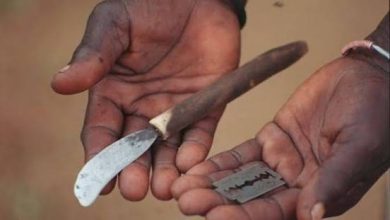
The traditional method of making Yoruba facial marks involved cutting the skin with a sharp instrument, usually a specially made knife. The cuts were made in specific patterns on the cheeks or other parts of the body.
According to a medical study by Adekunle O. George, Adebola O. Ogunbiyi and Olaniyi O. M. Daramola, published in the International Journal of Dermatology in 2006, the traditional procedure involved making sharp, thin cuts on the skin. Substances were then applied to the wounds during the healing process.
The number, length and arrangement of the cuts depended on the type of mark being made. The resulting scars remained on the skin permanently.
Types of Yoruba Tribal Marks
Yoruba tribal marks come in different patterns and sizes. Their names and designs vary among communities and families. Some of the well-known types include Abaja, Keke, Gombo, Ture, Pele, Mande and Jamgbadi.
Each pattern has its own characteristics and, in some cases, a particular connection to a family or community.
Abaja
Abaja is one of the best-known Yoruba facial marks. It consists mainly of horizontal lines drawn on both cheeks. The number of lines varies, with some patterns having three or four lines on each cheek.
In his book, The History of the Yorubas, first published in 1921, Samuel Johnson described Abaja as one of the principal facial marks among the Oyo people. He also explained that variations in the number and arrangement of the lines distinguished different families.
One well-known variation is Abaja Alafin Mefa, which is associated with six lines on each cheek. The Abaja pattern is not limited to one family, as different Yoruba communities have their own variations.
Keke or Gombo
Keke and Gombo are facial-mark patterns associated with the Oyo Yoruba and some other Yoruba communities.
According to Samuel Johnson’s description, the marks consist of vertical and horizontal lines arranged at angles on both cheeks. The pattern can cover a large part of the cheek, with differences in the thickness and appearance of the lines.
Johnson also noted a distinction between the two names. Keke refers to the bolder lines, while Gombo describes finer and less visible ones.
Ture
Ture is another traditional Yoruba facial mark. It consists mainly of vertical lines on the cheeks. Samuel Johnson described it as having four longer vertical lines, with additional short lines forming part of the pattern.
The arrangement differs from the horizontal lines found in Abaja and the combination of horizontal and vertical lines associated with Keke or Gombo.
Pele
Pele is another type of facial mark found among the Yoruba. It is generally made up of short lines on the cheeks.
There are variations in the appearance and use of Pele across Yoruba communities. Samuel Johnson described a three-line version that was worn by some people who wanted facial marks but did not wish to identify themselves with particular family distinctions.
Mande and Jamgbadi
Mande and Jamgbadi are also among the names recorded for traditional Yoruba facial marks.
Samuel Johnson included both among the principal types in his 1921 account. However, he observed that they were no longer in use at the time he wrote his book. He also recorded that Jamgbadi was traditionally associated with people from outside Yoruba communities who had become part of Yoruba society.
Tribal Marks Among Different Yoruba Communities
Although Yoruba communities share some facial-mark patterns, there are differences in their designs. These differences helped distinguish families and lineages.
The Ogbomoso people, for instance, are associated with Keke and Gombo markings, although the patterns are not exclusive to Ogbomoso. Other communities within the wider Oyo Yoruba group also have variations of these marks.
The Ondo people traditionally have a distinctive facial-mark pattern consisting of one bold vertical line on each cheek. This description is supported by Samuel Johnson’s account and later research on Yoruba facial scarification.
The Ijesa people also have their own facial-mark traditions. Historical records describe variations in their markings, including horizontal lines. However, the patterns are not limited to one fixed design, as family and lineage differences also influenced their appearance.
A study by Olukemi A. Fadehan and Olatunde O. Barber, published in Library Trends in 2021, explains that Yoruba facial marks were used to identify families, lineages and subgroups. The researchers also found that the patterns could provide information about a person’s ancestry.
The Origin of Yoruba Tribal Marks
There are different accounts of how Yoruba tribal marks originated. One popular account connects their origin to Sango, the Alaafin of Oyo.
The story was recorded by Samuel Johnson in The History of the Yorubas. According to the account, Sango once sent two slaves on a mission to a distant land. When they returned, one had successfully completed the assignment, while the other had failed.
Sango rewarded the successful slave but ordered that the other should receive 122 razor cuts as punishment. After the wounds healed, the scars gave the slave an appearance that attracted the attention of the king’s wives. They admired the marks and wanted similar cuts on their bodies.
Sango then decided that the cuts should no longer be used as punishment but should instead become a symbol of royalty. He also agreed to have the marks himself but could not bear more than two cuts on his arm.
According to this account, the practice later spread as people began to adopt different facial-mark patterns for identification and beauty.
However, this story is an oral tradition, not an established historical explanation for the beginning of Yoruba scarification. Research by Olatunji Ojo and other scholars points to evidence that scarification existed in different African societies before the period associated with Sango. It is therefore difficult to establish one individual or event as the origin of the practice.
The Decline of Tribal Marks in Modern Yoruba Society
The practice of giving tribal marks to children has declined considerably in modern Yoruba society. Changing social values, education, religious influences and concerns about the rights of children have contributed to this decline.
There are also medical concerns associated with the practice. Since it involves cutting the skin, it carries the risk of infection, particularly when the instruments used are not properly sterilised or wounds are not adequately treated.
A 2006 study published in the International Journal of Dermatology documented the traditional methods used to make and treat Yoruba skin markings. The procedure involved open wounds and the application of different substances during healing.
Another concern is the effect of facial marks on children as they grow older. Some people with tribal marks have experienced unwanted attention, discrimination or embarrassment because of their appearance.
The Nigerian Child Rights Act 2003 also prohibits the application of tattoos or skin marks to children. However, its implementation across the country depends on the adoption of the Act by individual states.
As the practice becomes less common, researchers have stressed the need to document its history and cultural significance. Yoruba facial marks were not simply decorative scars. They also served as a traditional means of recording family identity and ancestry.
Bamidele Oluwaseun (President, NAMACOS, AAUA), who spoke with Teslim Omipidan of OldNaija on the issue of tribal marks, had this to say:
“The practice of tribal marks should stop because it is a violation of an individual’s fundamental right. Apart from this, an individual with tribal marks is liable to get infected as different items which might contain germs are applied to the surface of the mark. If I have tribal marks inscribed on my face, I would feel different from others and would also segregate myself from my peers.”
Here is another interview Omitonade Ifawemimo, Ifa priestess and the CEO of Ancestral Vision Arts and Craft, had with OldNaija on the same issue of tribal marks.
OldNaija: Do you think having tribal marks is an infringement on the human right of choice?
Omitonade Ifawemimo: In modern-day, yes. The reason is that, at the time those marks were made the child did not have the capacity to decide whether he or she wanted it. If he grew up and chose it, no problem but as at present day it is a violation of his right.
OldNaija: Should the practise of tribal mark stop? If yes/no, why?
Omitonade Ifawemimo: No answer! You know tribal mark is part of Yoruba culture and traditions. The genesis of tribal marks started with Alafin Sango as a punishment and later developed to become an identity and beauty.
OldNaija: Will you proud if you have tribal marks inscribed on your face or feel other way?
Omitonade Ifawemimo: Maybe lol.
Thanks for reading, OldNaija.com
References:
- Samuel Johnson, The History of the Yorubas (1921), particularly the section on facial marks, pages 104–108. Read the historical text.
- Adekunle O. George, Adebola O. Ogunbiyi and Olaniyi O. M. Daramola, Cutaneous Adornment in the Yoruba of South-Western Nigeria: Past and Present (2006). https://onlinelibrary.wiley.com/doi/full/10.1111/j.1365-4632.2005.02684.x
- Olaníkẹ́ Ọlá Orie, The Structure and Function of Yoruba Facial Scarification (2011). https://www.researchgate.net/publication/262637276_The_Structure_and_Function_of_Yoruba_Facial_Scarification
- Olukemi A. Fadehan and Olatunde O. Barber, Documenting Genealogies: A Semiological Study of Tribal-Facial Marks and Lineage Networks of the Yoruba of Southwest Nigeria (2021). https://www.ideals.illinois.edu/items/117721/bitstreams/385969/data.pdf
- Olatunji Ojo, Beyond Diversity: Women, Scarification, and Yoruba Identity (2014). https://www.cambridge.org/core/journals/history-in-africa/article/abs/beyond-diversity-women-scarification-and-yoruba-identity/C2D4D212FE961DD22C1956F62CBCC0F2
Questions? Advert? Click here to email us.



The practice of tribal marks should not be stopped,it is part of Yoruba culture and tradition…….at the same time Human rights should not be violated, just like the case of recent years tattoos, let whoever want it make the personal decision.
Well phrased! Thank you so much for joining the conversation, Mrs Halimat Bamidele
remove your scar an tribal mark today call +2348187235120 or whatsapp
pls d page of tribal mark removal is fake…dey have duped me of 20,000 last week promising to send a tribal mark cream removal. the worst is dat they are not picking me calls,not responding to my messages. but I believe dat God will CURSE his entire generation.
Do not send anybody money online without clearifying there business
That’ s it! Thanks for your visit, Eben Mosi Dj-Oscar.
That is sad! You should have make indepth research on the company before paying out to them. Please note that the page is not sponsored by our website (OldNaija) nor is it an advertsiment. Thank you for alerting the world, Miss/Mrs Rose. This will save many other people.
I Luv D Ila
Thank you for your visit and comment, Mr. Emmanuel Samson. Kindly do check back.
this tribal mark removal is fake pls people should be aware they dupe people of their hard earn money but God will take care of their situation that money will not be beneficial to them they shall suffer the consequences
Thank you Favour. People should be well sure of money-service deals they make online before paying or rendering the service. And note that this website (OldNaija) does not support any online deal otherwise stated. The tribal mark removal link above is not endorsed by OldNaija.com
Thank you for visiting. Kindly do check back.
Many things caught my attention in this post.
*People used to give tribal marks with hot objects? Yikes!
*Tribal marks started as a punishment from Sango? And then was envied for its beauty? Wow. The slave must have felt so cool after the Olorìs got marks like him. #Celeb. :)
*Did the Ifa priestess actually “lol”??? :)
Thank you, Enioladunni.
I think that the costume of tribal mark should continue as a point of wiew of yoruba culture, but I can immagine how it hurts to be marked.
Thanks for sharing your thought, Giulio. Kindly do chack back.
yes they should stop it, some people do it for their baby and it is not good and some time they will use hot object to burn a baby skin or use sharp object to cut their baby skin
and for the tribal mark removal cream is a fraud don’t lose your money
Thanks for sharing your thoughts, Aliyah. This gies a long way. Kindly visit again.
I Dnt Even Like Tribal Mark @ All But Wetin Man Go Do, Am D Last Person That Have Tribal In Our Family, #SAY_NO_TRIBAL_MARK
I Dnt Even Like Tribal Mark @ All But Wetin Man Go Do, Am D Last Person That Have Tribal mark In Our Family, #SAY_NO_TRIBAL_MARK
By totally denouncing this practice is similar to erasing a part of Yoruba Ontological existence.
Everyone should be left to make choices in this regard.
It should be based on practical convictions other than flowery sentiment or flowing with cosmetic trends.
In as much as one is free to make choices in Western hairdos, change his or her skin colour and even adorned Western attires: Why not the Indigenous models.
Ila!! Another illuminating write up Akewi.
My take on it is that the right of the human should always be respected – children should never be subjected to it, while adults should be allowed to make their choice.
Then I must say that your view on this issue is the best. That way, Ila never will come with the violation of human rights. Thank you so much, my dearest mother Aweni. Thanks for your visit and comment.
Always a pleasure my dear Akewi.????
Ten years ago