


Nigeria’s History at the Africa Cup of Nations
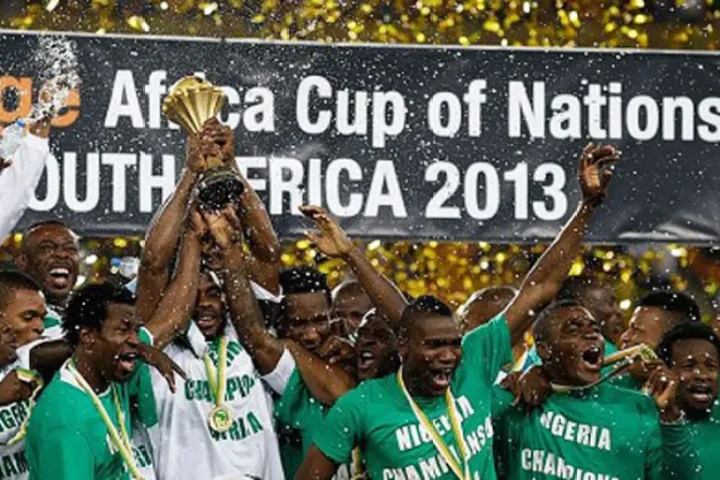
Nigeria’s relationship with the Africa Cup of Nations is not a straight road. It is a road with potholes, bright streetlights, sudden detours, and nights when the whole country seems to inhale at the same time. AFCON has given Nigeria glory, yes, but also the sharper gift: memory. You can trace eras by the players people still argue about, the goals they still mime in bars, the finals that still sting.
Three titles in 1980, 1994, 2013 look neat on paper. The story is messier in the body. It includes lost finals, generations judged too harshly, and comebacks that arrive when belief is already tired. That is why AFCON matters here. It is not only a tournament. It is a national mirror held up in public.
1976-1980: The Green Eagles Find Their Voice
Before the first title, there was the sense of Nigeria circling something. Third-place finishes in the 1970s hinted at a team learning how to survive tournament football: the small margins, the heat, the patience required to win ugly.



Then came 1980, hosted at home, and the feeling changed. Lagos became loud in a particular way. In the final, Nigeria beat Algeria 3-0, and it wasn’t a narrow, anxious victory. Segun Odegbami scored twice, and Muda Lawal added the third. The scoreboard permitted the country to celebrate without bargaining.
People remember the goals, but they also remember the feeling of a first crown. The team didn’t only win. It announced that Nigeria belonged at the top table of Africa.
1984-1990: Three Finals, One Long Lesson
The 1980s were Nigeria’s education in heartbreak. In 1984, Nigeria reached the final again and lost 3-1 to Cameroon. In 1988, another final, another Cameroon win, this one 1-0 with Emmanuel Kundé’s penalty. Then 1990 arrived, and Algeria beat Nigeria 1-0 in Algiers, Chérif Oudjani scoring the winner.
That sequence shaped the Super Eagles’ myth. Not because it was tragic, but because it was repetitive. It taught fans a harsh truth: being good is not enough. In AFCON, you must also be calm, ruthless, and lucky.
Those teams left behind a kind of residue that would follow Nigerian squads into the 1990s.
1994: Tunisia, Amunike, and the Day the Net Shook
Nigeria’s second title came with the clean violence of a fast start. In the 1994 final against Zambia, the match ignited immediately: Zambia scored in the 3rd minute through Elijah Litana, and Nigeria answered in the 5th through Emmanuel Amunike. Then Amunike struck again early in the second half, and Nigeria won 2-1.
That final is remembered for more than goals. Zambia’s run came in the shadow of the 1993 air disaster that devastated their national team, giving the match an emotional weight that didn’t belong to one country alone. Nigeria still had to win, and it did, under Clemens Westerhof, with a squad that could blend power with technique: Rashidi Yekini, Jay-Jay Okocha, Finidi George, and Daniel Amokachi.
For Nigerians, 1994 also sits beside another marker: the sense that the country could produce stars who looked comfortable anywhere.
2013: Keshi’s Team, Built from Quiet Materials
By the time 2013 arrived, Nigeria was not carrying the aura of certainty. The squad that won in South Africa felt like a correction. Stephen Keshi trusted a mix that many dismissed too early: home-based players beside established names, work beside flair.
The final against Burkina Faso was not a spectacle. It was a controlled, serious match. Sunday Mba scored in the 40th minute, and Nigeria held on to win 1-0. Mikel John Obi’s presence in midfield gave the team structure, and Vincent Enyeama provided the calm a tournament demands when nerves start to climb.
What made 2013 resonate was its mood. It wasn’t a victory that begged to be romanticised. It was a victory that looked earned.
Pride, Politics, and Street Noise
AFCON matters in Nigeria because it is communal. It pulls strangers into temporary brotherhood, then splits them again into arguments about tactics, coaches, selection, and “who really loves the shirt.” It turns living rooms into small stadiums. It turns street corners into debate clubs.
It also carries a deeper symbolism: Nigeria is many nations inside one state, and football has always been one of the few languages that can travel across those internal borders quickly. When the Super Eagles are alive in a tournament, the country feels briefly synchronised. When they lose, the arguments are fierce because the hope was shared.
Odds, Outrights, and the Matchday Notebook
AFCON invites prediction because it compresses form into short bursts: one set piece, one red card, and the bracket changes. Many punters build their routine around outrights, top-scorer markets, and simple match lines, and they often bet on melbetghana.com/en, tracking prices before committing. The useful habit is to treat odds as information, not prophecy: a drift can hint at an injury rumour, a shortened line can reflect heavy money, and neither replaces confirmed team news. If you wager, keep stakes disciplined, shop markets calmly, and resist the temptation to chase after a bad beat. The tournament is a sprint, and careful betting is the only way to keep it fun.
The Modern Fan Toolkit
Today, the match is rarely watched alone. Fans follow Africa Cup of Nations stats, group chats, and injury updates while the game is still breathing. It’s less like sitting in front of a television and more like managing a small control room.
On the road, the fan’s second screen is often a betting slip and a live stat feed at once. With melbet apk installed, a bettor can move from fixtures to in-play odds, then back to team news without losing the thread of the match. Live markets reward restraint: a price after a goal is rarely the best price, and halftime lines can be calmer places to think. Preparation is the real edge: lineups, match-ups, and a sober acceptance that knockout football is built on variance. Keep it measured, keep it scheduled, and let the football remain the main event.
What AFCON Leaves Behind
Nigeria’s AFCON history is not a museum. It is a living argument. It’s the 1980 joy that still feels like sunlight, the 1994 response to pressure, the 2013 reminder that balance beats noise. It’s also the finals that didn’t go Nigeria’s way, the ones that taught the country how to lose in public and return anyway.
AFCON ends, the streets are quiet, the flags come down. Then another edition arrives, and everything begins again: the hope, the suspicion, the stubborn belief that this time the story will bend our way.
Questions? Advert? Click here to email us.