


The Aburi Accord of 1967: Nigeria’s Last Chance at Peace
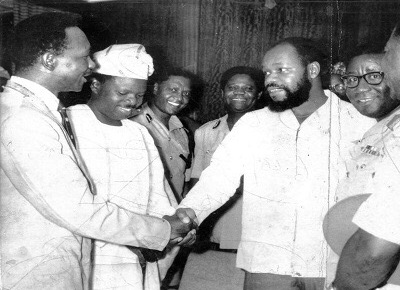
History is often a collection of “what ifs.” In the turbulent history of Nigeria, there is perhaps no bigger “what if” than the events of January 1967. This was when the country’s military leaders met in a quiet town in Ghana to try to save Nigeria from tearing itself apart. This meeting produced what we now know as the Aburi Accord.
At OldNaija, we believe that to understand the Nigerian Civil War, you must first understand this specific agreement. It was the final diplomatic effort to prevent the bloodshed that followed.
Why They Had to Meet in Ghana
By the end of 1966, Nigeria was effectively sitting on a keg of gunpowder. The country was deeply fractured.
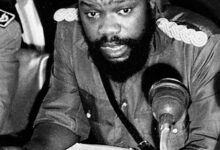
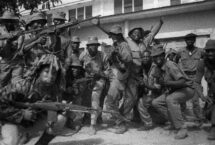
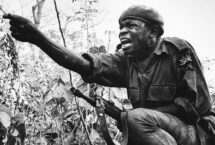
The Military Governor of the Eastern Region, Colonel Chukwuemeka Odumegwu Ojukwu, had refused to recognise the authority of the Federal Military Government in Lagos led by Lt. Col. Yakubu Gowon.
The tension was a direct result of the violent counter-coup of July 1966, which claimed the lives of Head of State General Aguiyi-Ironsi and Colonel Fajuyi.
Following that bloody night and the subsequent pogroms in the North, Ojukwu felt that the safety of the Igbo people, and his own safety, could not be guaranteed anywhere in the Northern or Western Regions of Nigeria.
Because of this intense fear and lack of trust, a neutral ground was needed for any kind of peace talk. They chose Aburi, a serene town in the Akuapim South Municipal District of the Eastern Region of southern Ghana. The meeting took place over two days, between the 4th and 5th of January, 1967.
The Delegates Behind the Aburi Accord
The gathering in Aburi was a roll call of the most powerful men in Nigeria at the time. It was the Supreme Military Council (representing the Federal Government) meeting face-to-face with the Eastern Region delegates.
The meeting was hosted and chaired by Lt.-General J.A. Ankrah, the Chairman of the Ghana National Liberation Council, who acted as the mediator between the feuding “brothers.”
The Key Nigerian Delegates included:
- Lt. Col. Yakubu Gowon: The Head of State (though Ojukwu disputed this title at the time).
- Lt. Col. Odumegwu Ojukwu: Leader of the Eastern Region.
- Major Mobolaji Johnson: Governor of Lagos State.
- Lt. Col. Hassan Katsina: Governor of the Northern Region.
- Lt. Col. David Ejoor: Governor of the Mid-Western Region.
- Colonel Robert Adebayo: Governor of the Western Region.
- Commodore Joseph Edet Akinwale Wey: Military Vice President of Nigeria.
- Alhaji Kam Selem (Inspector General of Police) and Mr. T. Omo-Bare.
They were supported by top civil servants and secretaries who were there to document the Aburi Accord, including N. Akpan (Secretary to the Military Governor of the East), Alhaji Ali Akilu (Secretary to the Military Governor of the North), D. Lawani (Mid-West), and P. Odumosu (West).
The Key Issues Addressed in the Aburi Accord
The agenda was heavy. They weren’t just there to exchange pleasantries; they were there to fix a broken nation. The discussions that formed the basis of the Aburi Accord focused on three critical areas:
- Re-organisation of the Army: The military had turned on itself during the coups of 1966. They needed to decide if soldiers should return to their regions of origin to cool tensions.
- Constitutional Agreement: How should Nigeria be governed? Should power remain concentrated at the centre in Lagos, or should the regions become more independent to prevent one group from dominating the others?
- The Issue of Displaced People: Thousands of Easterners had fled the North and were now refugees in their own country. The leaders needed a plan to manage this humanitarian crisis and pay salaries to displaced workers.
For a brief moment, it seemed like peace had won. Ojukwu managed to secure agreements that would effectively turn Nigeria into a confederation—a loose union where each region had significant autonomy.
Why the Aburi Accord Failed to Stop the War
Ojukwu left the meeting satisfied. Upon his return to Enugu, he famously declared, “On Aburi We Stand.” He believed the Aburi Accord was the final seal on the matter.
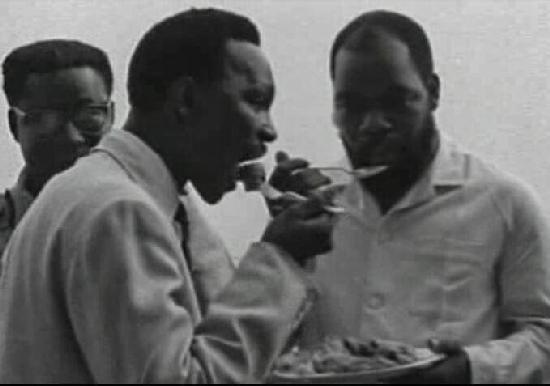
However, when Gowon returned to Lagos, the narrative changed. Federal civil servants and advisors warned Gowon that the agreement he had just signed would effectively break Nigeria into separate countries and strip the Federal Government of its power. They argued that Ojukwu had outsmarted them at the negotiation table.
In an attempt to save the situation while appearing to honour the agreement, the Federal Military Government promulgated Decree No. 8. This decree was supposed to be the legal embodiment of the Aburi Accord.
But it was too little, too late. Ojukwu rejected Decree No. 8, arguing it did not fully capture what was agreed upon in Ghana. The Accord broke down completely due to these different interpretations.
The failure to implement the Aburi Accord became the final straw. With diplomacy exhausted, the Eastern Region declared secession a few months later, leading to the devastating Nigerian Civil War (1967-1970).
Thanks for reading, OldNaija.com. This article is part of our Complete History of the Nigerian Civil War series.
References:
- Ademoyega, A. (1981). Why We Struck: The Story of the First Nigerian Coup. Evans Brothers.
- Cervenka, Z. (1971). The Nigerian War, 1967-1970. History of the War; Selected Bibliography and Documents. Bernard & Graefe Verlag für Wehrwesen.
- Omipidan, T. (2025, December 23). Jan 15 In Nigeria’s History: How the First Military Coup in Nigeria was Staged – OldNaija. OldNaija. https://oldnaija.com/2024/01/15/today-in-nigerian-history-first-military-coup-in-nigeria-on-jan-15-1966/
- Siollun, M. (2009). Oil, Politics and Violence: Nigeria’s Military Coup Culture (1966-1976). Algora Publishing.
- The Nigerian Civil War (1967-1970): The complete archive – OldNaIJA. (2025, December 23). OldNaija. https://oldnaija.com/nigerian-civil-war-history/
- NIGERIA CIVIL WAR: Inside the Aburi Accord and why the declaration could not stop the war. (n.d.). https://www.penglobalinc.com/nigeria-civil-war-inside-the-aburi-accord-and-why-the-declaration-could-not-stop-the-war
Questions? Advert? Click here to email us.

A world 4 d youth to visit so as not to forget our history…. Oldnaija
Thank you for your kind words, Mr Bolarinwa.
Great People Great Nation, Nigeria.
Indeed! Thank you for your visit and comment, Mr. Msughve Benjamin Naisho. Kindly do check back.