


The Kiriji War (1877-1893)
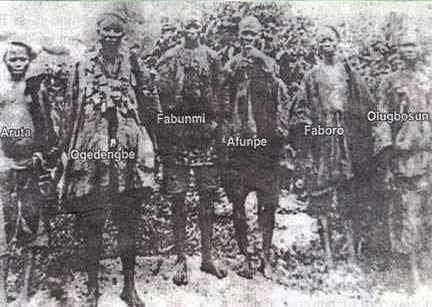
The Kiriji War, also known as the Ekiti-Parapo War, was a prolonged and devastating conflict that lasted for about sixteen years in the late nineteenth century.
The war occurred primarily between Ibadan, which had emerged as the dominant military power in Yorubaland after the collapse of the Oyo Empire, and the combined forces of the Ekiti and Ijesha people, who formed a strong alliance known as the Ekiti-Parapo to resist Ibadan’s political and military domination.
According to Latoosa, the Aare Ona Kakanfo of Ibadan at the time, “the Kiriji War ended all wars in Yorubaland.” The Kiriji War is unarguably the most protracted and destructive war that afflicted the Yoruba nation, draining the military strength of the warring states and weakening traditional political structures.
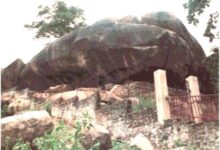
Causes Of The Kiriji War/Ekiti Parapo War
The Kiriji War broke out largely as a result of the unacceptable policies and style of administration imposed by Ibadan following its rise to political and military prominence in the nineteenth century.
Ibadan’s decisive role in the 1840 Osogbo War and its victory over Ijaye in 1862 firmly established the city as the most powerful military state in Yorubaland and, by implication, the successor to the fallen Oyo Empire. This newfound dominance emboldened Ibadan to extend its influence over other Yoruba towns through direct political control and military supervision.
To consolidate its authority, Ibadan stationed its administrators and military representatives in several parts of Yorubaland, particularly in Ekiti and Ijesha territories. These administrators were responsible for collecting tribute, maintaining order, and enforcing Ibadan’s authority.
However, their presence generated deep resentment among the local populations. The Ekiti and Ijesha people, like many other Yoruba groups, were unwilling to recognise Ibadan as the political stronghold of the Yoruba nation or to submit to its control.
The situation deteriorated further due to the misconduct and high-handed behaviour of the Ibadan administrators. According to tradition, they frequently harassed young men, abused their authority, and engaged in immoral practices, including sexual relationships with local women, which violated social norms and undermined local leadership.
These actions became the last straw for the Ekiti and Ijesha communities. Unable to tolerate such oppression and moral excesses any longer, they rose in revolt, killing several of the administrators and openly declaring war against Ibadan.
The conflict quickly expanded as other Yoruba towns and groups took sides, either aligning with Ibadan or joining the Ekiti-Ijesha alliance. This escalation transformed the uprising into the Kiriji (Ekiti-Parapo) War, one of the longest and most consequential wars in Yoruba history.
The War
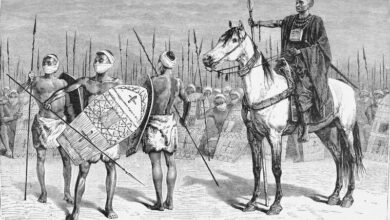
During the Kiriji War, Egba and Ijebu aligned themselves with the Ekiti and Ijesha forces against Ibadan. From the southern front, Egba and Ijebu troops advanced to attack Ibadan, while from the northern front, the combined armies of Ekiti and Ijesha, supported by the Fulani forces of Ilorin, launched coordinated attacks.
In addition, Ife entered the war on the side of the Ekiti and Ijesha. As a result of these multiple alliances, Ibadan found itself fighting on five different fronts simultaneously.
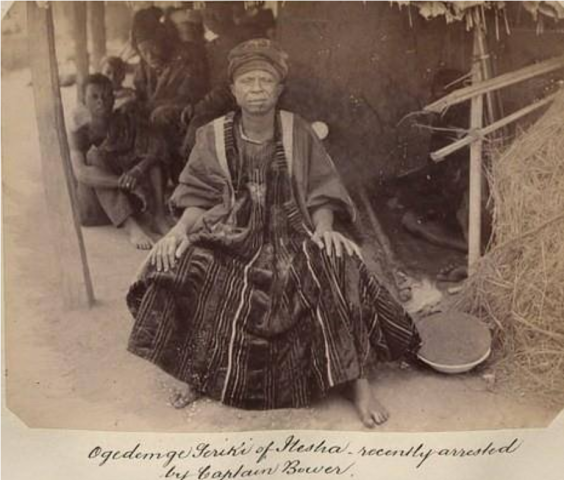
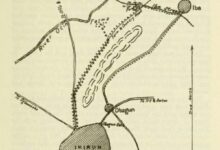
On the 1st of November 1878, Ibadan forces engaged the allied armies of Ekiti, Ijesha, and the Ilorin Fulani in the north-eastern area of present-day Osun State, near Ikirun. Despite the numerical strength of the allied forces, Ibadan emerged victorious, defeating them and driving them back to their camps. This major encounter became historically known as “Ogun Jalumi” (Battle of Waterloo), or the 1878 Battle of Ikirun.
Following this victory, Ibadan attempted to weaken the Ekiti forces by blockading their access routes, preventing them from transporting arms and ammunition through Ibadan-controlled territories. However, the Ekiti soon discovered an alternative supply route through Ondo to Lagos.
This route had been opened and maintained by the British, largely because other inland routes were frequently closed due to warfare and insecurity (Akintoye, 1969).
The Kiriji War also intensified the long-standing rivalry between Ife and the Oyo settlers at Modakeke, who were loyal to Ibadan. Tensions escalated during the war, and eventually Modakeke, with military support from Ibadan, attacked and sacked Ife
How Kiriji War Got Its Name
The name “Kiriji” was derived from an onomatopoeic expression, imitating the loud, thunderous “kiriji” sound produced by the heavy cannons used during the war. These weapons were acquired in large quantities by the Ekiti and Ijesha forces under the leadership of Ogedengbe, their renowned war commander.
The superior firepower of these cannons gave the Ekiti–Ijesha alliance a significant military advantage over Ibadan, whose forces relied mainly on older weapons.
Despite the prolonged nature of the conflict, early attempts to end the war were unsuccessful. In 1886, Governor Carter initiated peace negotiations between the two opposing sides, but these efforts failed due to deep-seated hostility and mutual distrust.
It was not until the British military expedition against Ijebu in 1892 that the balance of power in Yorubaland shifted decisively. During this expedition, the Ijebu army was defeated by British Maxim guns and seven-pounder rockets.
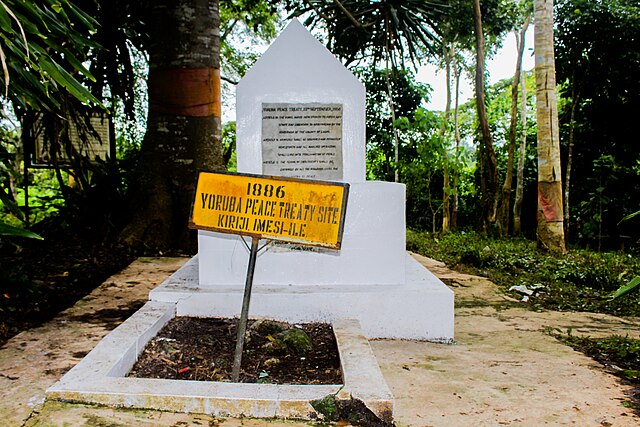
Following this, Governor Carter was finally able to enforce peace in 1893. Historical accounts state that he trekked from Lagos to the war camps of both sides at Igbajo and Okemesi, where he personally persuaded the Ibadan and Ekiti armies to lay down their arms and return to their respective homes.
Both parties were subsequently compelled to sign a peace treaty, which formally ended the Kiriji War. This treaty marked the loss of Yoruba political independence, as the once-powerful Yoruba states were brought under British protection, becoming part of the British protectorates in West Africa through diplomatic pressure and military superiority.
Thanks for reading, OldNaija.com
References:
- A Textbook Of West African History; E. Ola Abiola- May 1974
- Ogunniyi Morakinyo; Ekiti Parapo liberation war: (Kiriji War 1877-1886); Okemesi-Ekiti: Kayegbo Communications; 2006.
- Foluoyefeso. (2023, November 3). Unveiling the epic saga: The Kiriji War – Yoruba’s longest civil conflict. FoluOyefeso. https://www.foluoyefeso.com/post/unveiling-the-epic-saga-the-kiriji-war-yoruba-s-longest-civil-conflict
- Omipidan, T. O. (2019a, January 6). Jalumi War of 1878 (Battle of Ikirun). OldNaija. https://oldnaija.com/2017/07/21/jalumi-war-of-1878-battle-of-ikirun/
Questions? Advert? Click here to email us.

Hahaha, what made me laugh is the source of the name of the war. Kiiriiji.
Do kiiriji have any other meaning in Yorubaland?
Mr Emeka, it also made me laugh too. Kiriji has no other meaning in Yorubaland. Its just an Onomatopoeia, a name from the cannons.
On the other hand, if we study it carefully, kiriji can be used for “fear”. Thanks for visiting.
kiriji mean the sound of the British gun when British soldiers came to the war .their gun sound kiiriijiji kirijijii…..and another name for kiriji war is ekitiparapo war.thank you
gun used by ekitis and canon read
no that not correct…not brirish gun…kiriji mean is an ife yoruba words…which means storm cold war..
it was son of samuel ajayi crowther who came and settle their fights..not cracker mouse foolani offspring british
WHAT CONCERN IGBO MAN WITH YORUBA HISTORY
Mr. Aladeyelu, are we (all)not Nigerians? and also, one has to know everything in his field and at least you need to know little or more of history of your area (I.e NIGERIA)
Well said Mr. Aranisola. Well said!
It’s sad to say “what concerns Igbo man with Yoruba history”. I’m not Yoruba but not only are we one Nigeria, your daughter, son or a any other relative will someday marry from there or vice versa and at that time it will more than concern you!
Can’t say how happy I am reading your comment. Mr. Ben Ndede, you have spoken well. Thanks for your visit.
Hahahaha, Mr Aladeyeu, I think he is just interested in it, just the way I am also interested in Igbo history.
Thank you for your comment.
Hi blog owner, do cross check the years in the post. I see 1978 where I believe you mean to write 1878. You also said the war ended in 1993 which I suspect you mean 1893.
These errors go a long way.
Thank you so much, Mr El Komo. We’ll make the corrections right away.
when and where did these war took place because the elderly man that told us this story at ekiti parapo college ido did not tell us where the war took place.
The kiriji war started in 1877 and ended in 1893. It was fought in different locations like Osun and Ibadan. Thank you for your visit, Mr. Afolabi Taiwo Emmanuel.
I am from Igbajo and I should be there this week after 16 years. I am definitely going with my HD camera to record as many videos and pictures of historical places.
Wao! That is going to be cool, Mr. Oladipo. Please, do not forget to share the videos and pics with us. Thanks for your visit.
I like my own town for stronger to fight them all)
(Ibadan the land of greatest &heroes
Thanks for your visit and comment, Mr. Fashina Damilare. Ibadan is a land of great heroes indeed!
Kiriji the scared grammar.
Sacred grammar indeed! Thank you for your visit and comment, Comr. Ayplato. Please visit often.
I think I found this article useful…keep the good job blog owner
Thank you, Mr. Wahab Olawale. We appreciate your visit and comment. Kindly do check back.
wao have being looking for this history,really helpful.kiriji is now the name of the high school in my hometown Igbajo.
Wao! We’re happy to hear that. Thanks for letting us know, Miss/Mrs Rebecca. Your visit is highly appreciated. Please, visit often.
Am happy to have come across this….This epoch period is really worth celebrating most especially because it eventually unified the Yorubas.
Ibadan had and has continued to be a city of war veterans.This war brought into limelight the might and splendour of Ibadanland.The only unconquered land in the Yoruba kingdom.
Yes ooo! Thank you for your visit and comment, Sanga. Kindly do visit OldNaija.com regularly to get the best of Nigerian history and cultures.
Please Mr blogger. I’ll like you to write something on Iseyin as well. Thnks
Am currently living in Iseyin oja agbe side Mr popoola.
Wish to meet you?
what are the demographic effects of these 19the century Yoruba wars?
I like your write up, pls keep it up.
I surely will. Thank you for your visit and kind words, Mr. Agbomabiwon. I’m honoured having you here. Kindly do visit again. Cheers!
I had to search all through google to read something about igbajo because I chose the school to go for HND. the fact that it’s the first tertiary institution in Africa interests me alot and will love it to be on my cv. I found this story interesting and I will like to visit that okuta mewa (10 rocks) as soon as I settle down in the school. thanks for sharing this sir
You’re utmost welcome, Mr. Richard. I’m glad I could provide you some useful information. Do not forget to share your experiences at Okuta Mewa with us and kindly do visit again. Thank you.
Dear blogger,
Nice attempt at depicting the Kiriji war of the 19th century hear. However, I must point out a few of your lapses for the better understanding by u all.
1) Ogun Jalumi is not the “battle of Waterloo”. The correlation is by historians who are victims of the colonial mindset. Jalumi was so named because in their disorganized retreat from Ibadan onslaught, the Ekiti, Ijesha, Ilorin and allied forces lost many soldiers and auxiliaries to drowning in the Otin river in 1878. The real battle of Waterloo was the allied defeat of Napoleonic forces in the town of Waterloo, Belgium in Europe 63yrs prior! There is absolutely no correlation between both battles except the allusion to water!!
2) Your short summary seem to misrepresent Ibadan’s situation in the ensuing civil war. A direct cause of the war was the Ilorin Fulani invasion of the former Oyo controlled territories after the fall of Oyo Katunga. Ibadan stood out as the only genuine force to stop the Fulani ambitions after the total sack of Ijaiye. Ibadan’s involvement in fighting Ilorin created an opportunity for Ijesha/Ekiti/Ila revolt which was covertly instigated by the Fulanis. Ibadan ended up fighting on 5 fronts and became vilified as the evil axis but we must note that at the end of the war, only Ijebu were invaded by the British. Needless to say that non of the parties to the war achieved their long term ambitions as they all ended up being subjugated by the British who became the biggest beneficiary of the war.
You are full of wisdom, we need to meet
i would like to thank you for the excellent word you have done here. Just so that you realise, your articles have been found very useful teaching aids for the children of Nigerians in the diaspora.
plz I want to know more about this war.. majorly the implications and dynamic on Yoruba nation.. thanks
08062838266
If you can help us to touch the history of ijebuland, am sure we wil be happy. You really tried in unveiling this History.
Thanks for the wonderful insights and clarifications. The story has generated a lot of debate and it will in turn deepen our knowledge about rich Yoruba history. Sharing knowledge is power!
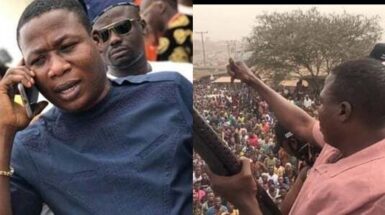
Kiriji War started in Okemesi Ekiti. The main promoter was Fabunmi, Okemesi. The picture you show here is that of Fabunmi Okemesi and not Ogedengbe. The group picture is also Fabunmi and his warriors. His picture used to be at Baba Owa House, Okerena Compound, Okemesi Ekiti.
The Ajeles, That is the Ibadan agents in Okemesi had become uncontrollable. In one occasion, one of the Ajeles, had touched Fabunmi woman while going to the river to fetch water. As if that was not enough, few days later, the Ajeles had insisted going to the Igbo Ehinle, where the priestesses of Ehinle bath alone. Men were not allowed to enter the bush, but the Ajeles insisted to follow the women to the place.
The information got to the town what the Ajeles were doing at Igbo Ehinle. Fabunmi mobilized some young men and got the Ajeles. There he cut the head of the lead Ajele and sent to Ibadan. This angered the Ibadan and sent “Aroko” to Okemesi to produce the head of FABUNMI in a calabash sent to the Oloja Oke of Okemesi. Fabunmi again cut the head of one of them and put in the calabash and sent to Ibadan. THAT WAS THE DELCARATION OF WAR!
When the Ekiti warrior came to Okemesi, the did not believe that Fabunmi could lead the war because Ogedengbe who was captured by the Ibadan earlier had made covenant not to fight the Ibadan and so did not early respond to the clarion call from the Ekitis.
At Ita-Ode, Okemesi Ekiti, Fabunmi then demonstrated his prowess and readiness to the Ekiti, when they were weary of qualified leadership. He hosted 200 pegs on the ground and shot his local dane gun. Each of the 200 pegs equally shot guns as if they were warriors! This convinced the Ekitis of Fabunmi ability to lead the war. he led them to Igbajo to meet the Ibadans.
In one occasion, Fabunmi had offered his first daughter as sacrifice and used the blood to make “moimoi” for the warriors to eat! Fabunmi engaged the Ibadans and their general for long time before Ogedengbe agreed to join the war.
FABUNMI, akatakoro, ganmuganmu kose lu oju ibembe, oko Aderin. (Fabunmi, a sharp object can not be use to beat the “Ibembe” drum, the husband of Aderin)
OKEMESI, ibi okunrin ti raun oya. (OKEMESI, where men lament about their wives). That is when the Ekiti warriors, depert from Okemesi to Igbajo, some cried and lamented about their wives at home.
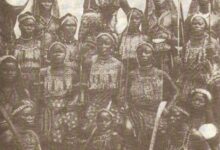
my comment is more of a question I’ll like to know if they were by any chance female warriors in the Ekiti parapo or were they all men