


Adegoke Adelabu: Story of the Charismatic Ibadan Politician Called “Penkelemesi”
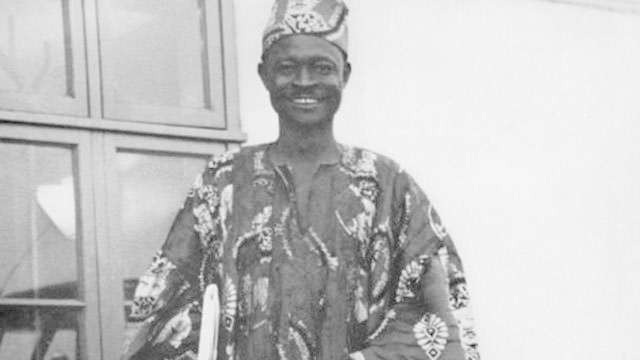
Adegoke Adelabu was not the tallest politician in Nigeria. He was not the richest either. But when he spoke, crowds gathered. Enemies trembled. Supporters roared. In the heated politics of colonial Nigeria, few men carried as much fire in their mouth as Adelabu.
Even today, decades after his death, many older Nigerians still remember one strange word linked to his name — “Penkelemesi.” A simple pronunciation mistake turned into a political nickname that refused to die. But behind that funny nickname was a deeply intelligent man, a fierce nationalist, and one of the most influential politicians Ibadan ever produced.
Who Was Adegoke Adelabu?
Adegoke Adelabu was a Nigerian politician, nationalist, journalist, and political thinker born in 1915 in Ibadan, present-day Oyo State. He became one of the dominant political voices in Western Nigeria during the 1950s, especially within Ibadan politics.

Brilliant, controversial, charismatic, and fiercely ambitious, he rose from humble beginnings to become a major force in Nigeria’s struggle toward self-government.
Many Nigerians know him by his nickname, “Penkelemesi,” a Yoruba-style adaptation of the English word “peculiar mess.” During one of his political speeches, Adelabu reportedly used the phrase to describe the confused state of Nigerian politics. The pronunciation stuck. Soon, the public began calling him “Penkelemesi,” and the name became part of Nigerian political folklore.
Adelabu belonged to the generation of Nigerian politicians who emerged during the final decades of British colonial rule. While leaders like Chief Obafemi Awolowo and Dr. Nnamdi Azikiwe were building national political structures, Adelabu was building something equally powerful in Ibadan — mass political loyalty rooted in populism, intellect, and street-level connection.
His story is also deeply tied to the political history of Ibadan and the turbulent politics of Western Nigeria.
Early Life and Background
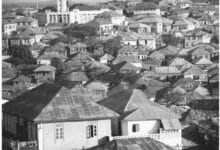
Adegoke Adelabu was born on September 3, 1915, in Ibadan. At the time, Ibadan was already one of the most influential Yoruba cities in Nigeria — loud, politically conscious, commercially active, and deeply proud of itself. You could say Ibadan politics was already intense long before Nigeria became independent.
Adelabu came from a modest background. His parents were not wealthy elites. Life was difficult, and like many children growing up under colonial Nigeria, education was one of the few possible ladders out of poverty.
From an early age, he showed unusual intelligence. People around him quickly noticed that this boy could speak well, argue sharply, and absorb knowledge with ease. He attended several schools in Ibadan before gaining admission into Government College, Ibadan — one of the most prestigious schools in colonial Nigeria.
But education did not come easily. Financial hardship constantly threatened his studies. At different points, he reportedly had to struggle intensely to remain in school. Adelabu developed a deep sympathy for ordinary Nigerians, especially poor urban dwellers trying to survive colonial economic realities.
Not many people know this, but Adelabu was also a voracious reader. He loved books passionately and spent countless hours studying politics, economics, history, and philosophy. This intellectual depth later became one of his greatest political weapons.
Adegoke Adelabu’s Rise to Political Prominence
Before entering full-scale politics, Adelabu worked in the colonial civil service. He also spent time in journalism and public communication. His sharp pen and even sharper tongue helped him gain recognition in Ibadan circles.
But ordinary office work could never contain a man like Adelabu.
By the 1940s and early 1950s, nationalism was spreading across Nigeria. Educated Nigerians increasingly demanded self-rule from the British. Political parties were forming. Newspapers were attacking colonial policies. The atmosphere was electric.
This was the era of political giants like Herbert Macaulay, Nnamdi Azikiwe, and Obafemi Awolowo.
Adelabu entered this environment with confidence and theatrical energy.
The Ibadan Political Machine
Adegoke Adelabu became deeply involved in Ibadan politics and quickly built a loyal following among the city’s common people. Unlike many elite politicians who sounded distant and polished, Adelabu spoke in ways ordinary people understood.
He mixed intelligence with street charisma.
He could quote English philosophers one minute and switch into earthy Yoruba expressions the next. Market women loved him. Youths admired him. Many saw him as one of their own.
His political organisation became enormously influential in Ibadan. In fact, at one point, Ibadan politics practically revolved around him.
One reason for this popularity was his open criticism of elitism within Nigerian politics. Adelabu believed political power should not remain in the hands of a few educated aristocrats alone. He cultivated an image as a defender of the masses.
Imagine attending one of his rallies in 1950s Ibadan. Loud crowds. Drums beating. Dust rising from packed roads. Then Adelabu climbs the stage and begins speaking in his powerful voice. It must have been something to witness.
Conflict with Obafemi Awolowo and the Action Group
One of the defining chapters of Adelabu’s political life was his complicated relationship with Chief Obafemi Awolowo and the Action Group (AG).
Initially, Adelabu was associated with the Action Group, the dominant political party in Western Nigeria led by Awolowo. But politics in Western Nigeria was rarely peaceful. Personal ambition, ideological disagreements, and regional power struggles constantly created tension.
Adelabu eventually broke away from Awolowo’s camp.
The split was serious. Ibadan politics became deeply divided between supporters of Adelabu and supporters of the Action Group leadership. These conflicts later contributed to the wider instability that consumed Western Nigerian politics during the late 1950s and early 1960s.
To fully understand the political atmosphere that followed, readers can also check OldNaija’s article on Operation Wetie and the Action Group Crisis.
The Famous “Penkelemesi” Incident
No discussion of Adegoke Adelabu is complete without the famous “Penkelemesi” story.
During a political speech, Adelabu reportedly used the phrase “peculiar mess” while criticizing political conditions in Nigeria. His pronunciation sounded like “Penkelemesi” to many Yoruba listeners.
The public loved it instantly.
Soon, people everywhere began calling him “Penkelemesi.” Political opponents mocked him with it. Supporters embraced it proudly. In typical Nigerian fashion, the nickname became bigger than the original statement.
Ironically, what started as a pronunciation incident became one of the most unforgettable political nicknames in Nigerian history.
Even today, many Nigerians know the nickname without fully knowing the man behind it.
Adegoke Adelabu’s Political Ideas and Influence
Adelabu was more than just a crowd-pulling politician. He was intellectually serious.
He strongly believed Nigeria needed rapid modernization, educational expansion, and stronger political participation from ordinary people. He criticized colonial structures but also challenged fellow Nigerian politicians whom he considered disconnected from the masses.
One of his greatest strengths was communication. He understood how language could move people emotionally. Unlike many politicians who sounded stiff and rehearsed, Adelabu spoke with passion and spontaneity.
There was also something deeply dramatic about him. He enjoyed political theatre. He understood symbolism. He knew how to dominate headlines.
In many ways, he represented an early version of populist politics in Nigeria.
Challenges, Rivalries, and Political Struggles
Adegoke Adelabu’s political life was filled with battles.
His rivalry with powerful Western Nigerian political figures created enemies on multiple fronts. Politics in that era was rough, personal, and deeply tribal at times. Accusations flew constantly. Alliances changed rapidly.
Adelabu also faced criticism for his aggressive political style. Some opponents considered him too confrontational and overly ambitious. Others accused him of fueling division within Yoruba politics.
But Adelabu never tried to appear soft or diplomatic. He enjoyed political combat.
At the same time, the broader political environment in Nigeria was becoming increasingly unstable. The final years before independence were marked by regional rivalries between the North, West, and East. Political parties fought bitterly over representation, constitutional reforms, and power-sharing.
This was the same era discussed in OldNaija’s articles on the Ibadan Constitutional Conference of 1950 and the Eastern Nigerian Regional Crisis of 1953.
Sadly, Adelabu’s growing political influence also came with immense pressure. The expectations from supporters were enormous, and the political hostility around him never truly disappeared.
Death of Adegoke Adelabu ‘Penkelemesi’
On March 25, 1958, tragedy struck.
Adegoke Adelabu died in a car accident near Ibadan at just 42 years old. Nigeria had not yet gained independence when he died. Many supporters were devastated. To them, it felt like the country had lost one of its most energetic political voices too soon.
His death shocked Western Nigeria deeply.
You might wonder what Nigerian politics would have looked like if Adelabu had survived into the independence era. Would he have become the premier of the Western Region someday? Would he have played a major national role after 1960? Nobody can say for certain.
But his early death undoubtedly changed the political future of Ibadan and Western Nigeria.
Even decades after his death, Adegoke Adelabu remains one of Ibadan’s most remembered political figures.
His legacy lives on through stories, books, political discussions, and public memory. In Ibadan especially, the name “Penkelemesi” still carries emotional weight. Streets and institutions have also been named in his honour.
More importantly, Adelabu helped redefine grassroots politics in Western Nigeria. He proved that intellectualism and mass appeal could exist together in Nigerian politics.
He also left behind an important lesson about charisma in Nigerian public life. Nigerians have always loved politicians who can connect emotionally with ordinary people — leaders who can speak both the language of intellectuals and the language of the streets. Adelabu mastered that balance remarkably well.
And perhaps that is why people still talk about him today. Not because he lived long. Not because he became head of state. But because he burned brightly and loudly in a period when Nigeria itself was struggling to define what it wanted to become.
Thanks for reading, Oldnaija.com.
References:
- (Hon) Barr. Femi Kehinde, former member House of Representatives- ADEGOKE ADELABU PENKELEMESI: A dazzling politician, meteor and iconoclast (1915-1958)- Vanguard
- Jenkins, George (1965) Politics in Ibadan (Thesis) Northwestern University
- Ruben Abati; Significance of Adegoke Adelabu: The Nationalist Philosopher; Guardian Newspaper; 2005
- Eap_Admin. (2026, March 27). ADELABU, ADEGOKE. Encyclopaedia Africana.
- Omipidan, T. (2021, May 25). Operation Wetie and the 1962 Action Group Crises: How power tussle between Awolowo and Akintola plunged We . . . OldNaija. https://oldnaija.com/2018/01/28/operation-wetie-and-the-1962-action-group-crises-how-power-tussle-between-awolowo-and-akintola-plunged-western-region-into-crises/
Questions? Advert? Click here to email us.


History well traced, weldone Teslim Omipidan and team oldnija.
Thank you so much, Kutadadon. It’s an honour having you here. Thank you for your kind words. Kindly do check back.
You are doing a wonderful job here. Amazing! Well done. Don’t ever doubt how important this site is to a lot of people….x
(Smiles) Thank you so much for your kind words, Aweni. I’m really honoured to have you here. Thanks for the visit and comment. Kindly do check back. Cheers!
The honor is mine and I will definitely not be far from here….x
thanks for sharing this concise and indepth write up on the one and only Penkelemesi of the old western region. keep up the good work. Regards.
Thank you for your visit and wonderful comment, Juba Adeola. We surely will. Kindly do check back.
You would not believe I read this story from the beginning to the end. Is it just because I’m interested in it. No, but because of the way it I’d finely written and narrated. Thanks for s good work done.
Hmnnnnn…too young to die at that time but thank God,he left a good legacy
These are absolute reckoning and award winning, well researched socio-politics of the Yoruba that would belong to a historical top list edifice to be inherited by future generation of the Yorubas. They are also necessary collector’s items. You have my respect, Teslim.
Bringing these stories back to life is very laudable. Please note there was no direct road between Ibadan and Lagos until the late 70s. As such Adelabu could not have died on that road in 1958!
Spend a bit more time researching and verifying stories and sources. Overall, I commend you for your work.