

Fela Anikulapo Kuti: Life of the Fearless Man Who Turned Music Into A Weapon
The soldiers came in hundreds. They beat people mercilessly, burned buildings, and turned a thriving commune into ashes. Somewhere in the chaos, an old woman was thrown from a window. She later died from her injuries.
That old woman was the mother of Fela Anikulapo Kuti.
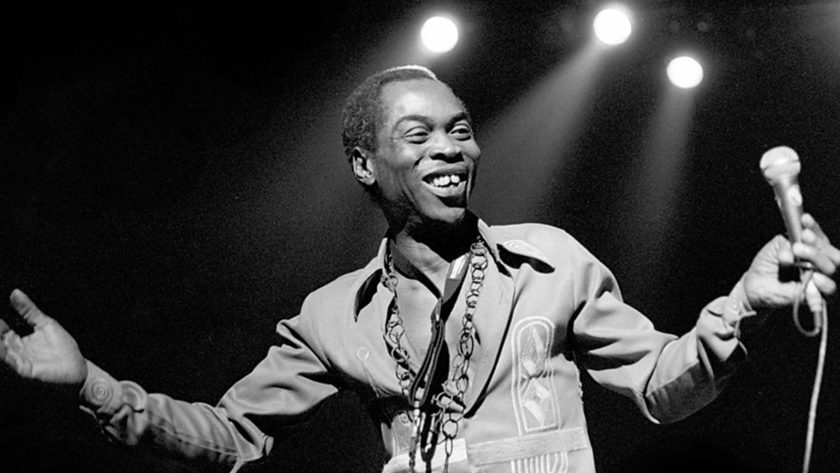
For many Nigerians, Fela was more than a musician. He was trouble. He was courage. He was madness and genius mixed together. In a country where many feared military rulers, Fela stood on stage night after night and called them thieves, oppressors, and criminals — directly into the microphone.

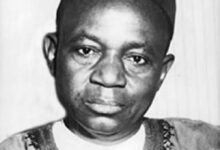
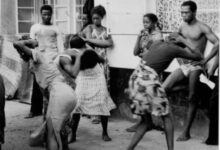
And somehow, he kept singing.
Who Was Fela Anikulapo Kuti?
Fela Anikulapo Kuti was a Nigerian musician, political activist, bandleader, and creator of Afrobeat music. Born Olufela Olusegun Oludotun Ransome-Kuti on October 15, 1938, in Abeokuta, Ogun State, he became one of the most influential Africans of the 20th century.
He was not just famous for music. Plenty of musicians were popular in Nigeria during the 1970s and 1980s. Fela was different because he used music as a weapon against corruption, military brutality, colonial mentality, and injustice. His songs were long, raw, sarcastic, and deeply political. Some Nigerian leaders genuinely feared him.
Fela later dropped the colonial surname “Ransome” and adopted “Anikulapo,” a Yoruba phrase often translated as “he who carries death in his pouch.” It was classic Fela — dramatic, spiritual, rebellious, and impossible to ignore.
His story also connects deeply with other major Nigerian historical figures like Chief Obafemi Awolowo and Funmilayo Ransome-Kuti, both of whom played important roles in Nigeria’s political history.
Early Life and Background
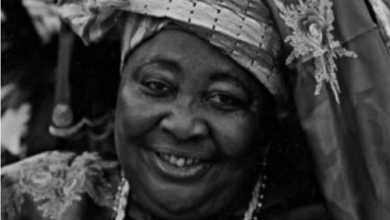
Fela was born into a powerful and highly educated Yoruba family in Abeokuta. His father, Reverend Israel Oludotun Ransome-Kuti, was a teacher, Anglican minister, and school principal. His mother, Funmilayo Ransome-Kuti, was one of Nigeria’s most fearless women activists and a major figure in the anti-colonial struggle.
Imagine growing up in a house where political arguments, activism, education, and culture filled the air daily. That environment influenced Fela from childhood.
Not many people know this, but Fela’s family was deeply respected long before he became famous. His mother led protests against unfair taxation in Abeokuta and challenged traditional and colonial authorities at a time when many women were expected to remain silent. Years later, Fela would inherit that same fearless spirit.
As a young boy, Fela attended Abeokuta Grammar School before travelling to London in 1958. Ironically, his parents wanted him to study medicine. But medicine was not calling him.
Music was.
Fela’s Time in London and the Birth of a Musician
While in London, Fela enrolled at Trinity College of Music instead of pursuing medicine. There, he studied piano, composition, and music theory.
During this period, he formed a band called Koola Lobitos. The group mixed highlife, jazz, and traditional African rhythms. At the time, highlife music was already very popular across West Africa, but Fela wanted something deeper and more original.
His early sound was heavily influenced by jazz legends like Miles Davis and John Coltrane. But he was also rooted in Yoruba rhythms, chants, and percussion.
When he returned to Nigeria in the 1960s, the country itself was changing rapidly. Nigeria had gained independence in 1960, but political crises, coups, and ethnic tensions soon followed. The atmosphere eventually exploded into the Nigerian Civil War in 1967.
Fela watched all this unfold around him. And it changed him completely.
Sandra Smith and Fela’s Political Awakening
One turning point in Fela Anikulapo Kuti’s life came during a trip to the United States in 1969.
There, he met Sandra Smith — later known as Sandra Izsadore — a Black Panther supporter who introduced him to revolutionary Black politics, African history, and anti-imperialist literature.
Before then, Fela’s music was mostly entertainment. After meeting Sandra, everything changed.
Suddenly, his lyrics became sharper. Angrier. Political.
He began to see military governments and colonial mentality as part of the same problem. He started openly criticising Nigeria’s leaders, police brutality, exploitation, and Western influence over African societies.
This transformation eventually gave birth to Afrobeat.
Afrobeat and the Rise of a Revolutionary
Afrobeat was not ordinary music. It was a movement.
Fela combined jazz, Yoruba percussion, highlife, funk, call-and-response vocals, and political commentary into something completely unique. Songs often lasted over 15 minutes. Some stretched past 30 minutes.
The grooves were hypnotic. The lyrics were confrontational.
Tracks like “Zombie,” “Shakara,” “Sorrow Tears and Blood,” “Coffin for Head of State,” and “International Thief Thief (ITT)” attacked corruption and military oppression directly.
“Zombie,” released in 1976, mocked Nigerian soldiers by comparing them to mindless robots who only obey orders. The military government was furious.
Very furious.
At the time, Nigeria was under military rule, and criticising the government openly could get someone imprisoned — or worse. Yet Fela kept going.
His nightclub, The Shrine, became more than a music venue. It was a political and cultural gathering place where young Nigerians came to hear truth spoken boldly.
Kalakuta Republic: Fela’s Kingdom of Defiance
Fela eventually declared his communal residence, Kalakuta Republic, independent from the Nigerian state.
Yes, you read that correctly.
Kalakuta Republic operated almost like its own mini-country. It housed musicians, dancers, friends, activists, and followers. Fela openly challenged the authority of the Nigerian government from there.
To many conservatives, the place represented chaos and immorality. To his supporters, it represented freedom.
Fela also rejected many Western ideas and embraced African spirituality, traditional beliefs, and Pan-African identity. He regularly attacked what he saw as the blind imitation of European culture among African elites.
Around this period, he also famously named his donkey “Yakubu” after Nigerian Head of State Yakubu Gowon — a classic example of Fela’s provocative humour.
The 1977 Attack on Kalakuta Republic
Then came one of the darkest moments in Fela’s life.
In February 1977, shortly after the release of “Zombie,” soldiers stormed Kalakuta Republic. The compound was destroyed. People were beaten severely. Instruments and recordings were burned.
Fela himself was brutally assaulted.
But the greatest tragedy was what happened to his mother, Funmilayo Ransome-Kuti. During the invasion, she was thrown from a window by soldiers. She later died from complications related to those injuries.
Nigeria was shocked.
Fela responded the only way he knew how — through music.
He carried a symbolic coffin to Dodan Barracks, the seat of government at the time, and later released the song “Coffin for Head of State,” accusing the military leadership of responsibility for his mother’s death.
It was one of the boldest acts of protest in Nigerian history.
Why Fela Married 27 Women
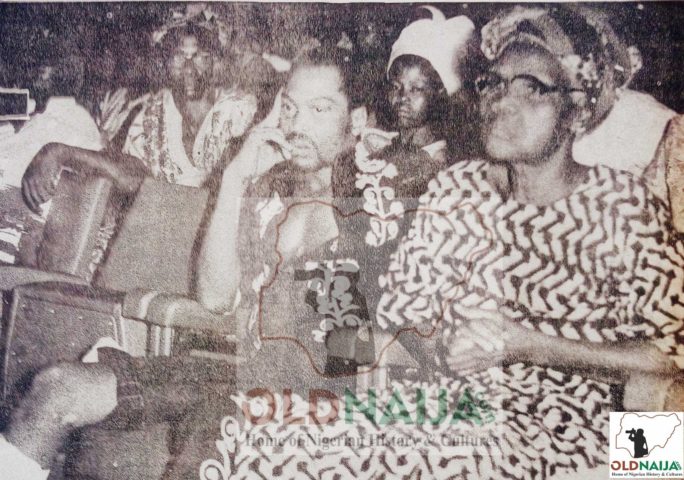
In 1978, Fela shocked the country again by marrying 27 women on the same day.
Nigeria could hardly believe it.
Most of the women were dancers, singers, and performers associated with his band and commune. Fela claimed he married them partly to protect them from rumours and harassment from authorities.
Of course, the decision generated huge controversy. Religious groups criticised him. Conservatives condemned him. Newspapers had a field day.
But Fela rarely cared about public approval. He lived exactly how he wanted, whether society liked it or not.
Years later, the story would remain one of the most talked-about celebrity moments in Nigerian social history.
Arrests, Harassment, and Endless Battles with Authority
Fela’s clashes with the Nigerian government became constant.
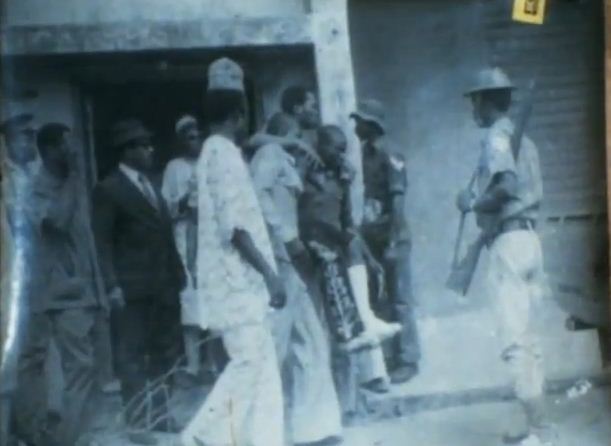
Over the years, he was arrested dozens of times on charges ranging from currency violations to drug possession. Many Nigerians believed several of the charges were politically motivated.
There were raids. Beatings. Court cases. Prison sentences.
Yet each attack only seemed to make him louder.
One of his most famous albums, “Beasts of No Nation,” criticised leaders across Africa, including military rulers who presented themselves as patriots while oppressing ordinary citizens.
You have to understand how dangerous this was in that era. Nigeria, during military rule, was not a place where public criticism came without consequences. Journalists disappeared. Activists were detained. Fear was everywhere.
But Fela kept dancing and insulting dictators on stage almost every week.
Fela’s Influence Beyond Nigeria
By the 1980s and 1990s, Fela had become an international icon.
Musicians around the world admired him. His influence spread far beyond Africa. Today, artists from hip-hop, jazz, reggae, funk, and alternative music still sample or imitate Afrobeat rhythms.
Without Fela, modern Afrobeats — the global genre dominating charts today — would probably look very different.
Even though Afrobeat and Afrobeats are not exactly the same thing, many modern Nigerian artists still trace part of their musical heritage back to him.
His annual remembrance festival, Felabration, continues to attract fans from around the world.
Death of Fela Anikulapo Kuti
Fela Anikulapo Kuti died on August 2, 1997, at the age of 58.
His brother, Professor Olikoye Ransome-Kuti, announced that the musician had died from complications related to AIDS. At the time, discussions around HIV/AIDS carried heavy stigma in Nigeria, making the announcement especially significant.
More than a million people reportedly attended his funeral procession in Lagos.
Think about that for a moment.
A man once treated like a dangerous rebel by the state was mourned publicly by massive crowds who saw him as a hero of the people.
Even in death, Fela remained larger than life.
Legacy and Impact of Fela Anikulapo Kuti
Today, Fela’s legacy is impossible to ignore.
He changed African music forever. He gave Africa a globally respected sound that was unapologetically African in rhythm, language, and identity. He also inspired generations of activists who saw courage in his refusal to bow before authority.
The New Afrika Shrine in Lagos continues to preserve his spirit through music and performances led partly by his sons, especially Femi Kuti and Seun Kuti.
His life has inspired documentaries, books, academic studies, and even a Broadway musical titled Fela!
More importantly, many of the issues he sang about decades ago — corruption, police brutality, bad governance, inequality — still resonate strongly in Nigeria today.
That is why Fela never truly feels like history.
Every time Nigerians protest injustice, question authority, or demand accountability, echoes of Fela can still be heard somewhere in the background.
Thanks for reading, OldNaija.com
References:
- Britannica Editors. (2025, December 21). Fela Kuti | Afrobeat pioneer, Nigerian activist. Encyclopedia Britannica. https://www.britannica.com/biography/Fela-Kuti
- Omipidan, T., & Omipidan, T. (2021, April 16). Why Fela Kuti married 27 women on the same day in 1978. OldNaija. https://oldnaija.com/2018/10/20/how-and-why-fela-anikulapo-kuti-married-27-women-on-the-same-day-with-marriage-photos/
- Omipidan, T., & Omipidan, T. (2024, September 15). How and Why “Unknown Soldiers” Attacked Fela’s Home, Kalakuta Republic, in 1977. OldNaija. https://oldnaija.com/2017/09/22/how-and-why-unknown-soldiers-invaded-felas-home-kalakuta-republic-in-1977/
- Olaniyan, T. (2004). Arrest the Music! Fela and His Rebel Art and Politics. Bloomington: Indiana University Press.
- Collins, J. (2018). African Musicians and Politics: Fela Kuti’s Afrobeat Revolution. Journal of African Cultural Studies, 30(2), 123–140.
Questions? Advert? Click here to email us.